Posts

Showing posts with the label Allegory

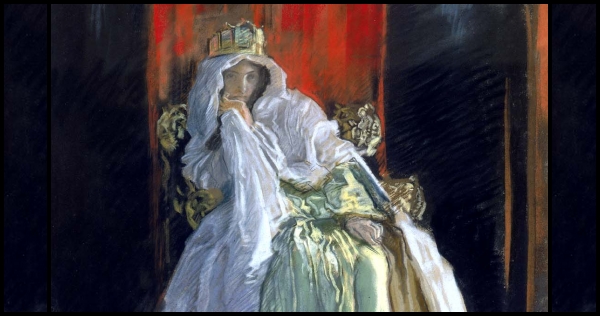
Part 31: Gertrude as Protestant Allegory (Interlude A)
Image
[My previous post said that the next four would explore four different interpretations of Gertrude; this post explores the first of those interpretations in greater detail, an allegorical reading.] One of my least favorite interpretations of Gertrude in Shakespeare’s Hamlet is when people read her merely as a Protestant allegory for the corrupt Catholic church. In this reading, Gertrude (like the Roman church) is a slave to her passions; she cannot resist either her lust for Claudius or her desire for wine.[1] Many readers and playgoers today are too removed from Protestant-Catholic debates and propaganda in Shakespeare’s time, so to suggest this allegory often elicits only confusion. In the Bible, in Revelations 17, Protestants found an analogy for corruption in the Roman Catholic church, comparing it to a fallen woman selling favors, worshiping idols of pleasure instead of the “one true God.” It helps to know that Shakespeare and most everyone in England and on the continent were exp...

Part 30: A Tale of Four Gertrudes (Interlude/Prelude)

Image
There are as many interpretations of Gertrude as there are readers, spectators, and actors. My next four posts will explore just four readings of Gertrude, especially regarding motivations for drinking from what she may or may not know is the poison cup intended for her son. Whether Ophelia and Hamlet influence Gertrude or not can only be determined by scrutinizing what really happens with Gertrude. A brief summary of just four of many possibilities (I prefer # 4): 1. Gertrude as Protestant allegory for a corrupt Catholic Church. Gertrude drinks because she is a slave to her animal passions as mother, as incestuous adulterer, and as slave to drink. For an example of this reading, see Linda Kay Hoff, Hamlet's Choice: A Reformation Allegory. 2. A surprised Gertrude as queen of wishful thinking [1]: Gertrude sees “The Mousetrap” (with its mention of poison) and hears Hamlet accuse Claudius of murder, but thinks Hamlet is mad; she doesn’t tell Claudius of Hamlet’s accusations to protec...