Posts

Showing posts with the label ambiguity

Shakespeare's Uses of Ambiguity (What We Talk About When We Talk About Ambiguity in Shakespeare)

Image
There are at least three major uses of ambiguity in Shakespeare. How we speak of it, and what we value about it, vary widely.  1. One popular use of ambiguity can be a “Rorschach Effect”: Many believe that this gives actors and audiences permission to imagine and interpret any meaning or motivation they wish about the lines [1].  Shakespeare, his playing company, and early audiences may not have been quite that relativistic [2], but it certainly helps playing companies today in new contexts, to adapt plays to changing circumstances.  2. A second kind of ambiguity might be a “Scheherazade Effect” [3]. If you live in times when many are executed for their opinions or religious allegiances, you might feel like Scheherazade, who had to entertain with stories to stay alive.  If you also wanted to catch the conscience of the monarch, you had to be careful, or there would be trouble [4]. Instead of being too confrontational, one had to be indirect [5]: One had to use storie...

Part 50: Ophelia Pregnant with Mystery

Image
As I said at the end of Part 48 [1], I do like that a pregnancy for Ophelia is suggested but not conclusive in Hamlet, and that such mysteries and ambiguities may be something like a presence of God: "Who's there?" - the play’s opening question, would have been appropriate for the rich man who neglects the beggar Lazarus to whom the Ghost refers [2], as well as for the baker’s daughter referred to by Ophelia [3]. In both cases, those who neglect the beggar at the door neglect the presence of God. How do we face the presence of mystery in the beggar, the stranger? In Ophelia? Did Ophelia miscarry, and in postpartum depression, commit suicide, which Gertrude generously conceals in a story about an “envious sliver” and a death in faith [4]? Would the Ophelia we come to know in the play have killed herself and an unborn child? Can we know for certain, or is such a quest for certitude like a form of self-idolatry? How might we consider the mystery of Ophelia in the context of ...

"The rest is silence": Musical Notation, Nihilism, and Ambiguity

Image
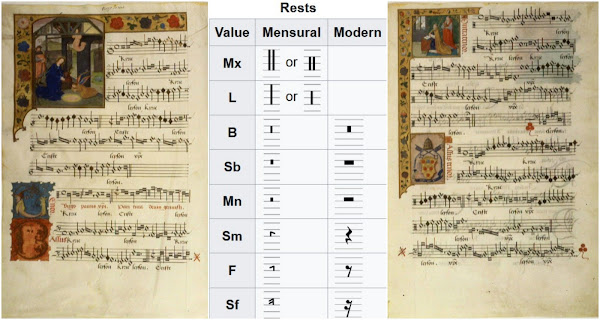
"The rest is silence." When Shakespeare scholars write about Hamlet's last words, more often than not, their focus is that Hamlet is being serious, even nihilistic. Too few critics and scholars consider that Hamlet is making a musical pun for Horatio (and for theater audiences) with his last breath: The rest (in musical notation) is silence. Hamlet is, after all, not only the son of King Hamlet and Queen Gertrude, but also the spiritual offspring of Yorick the fool. His first words in the play involve a sarcastic pun: His uncle Claudius calls Hamlet his son, and Hamlet says he is “too much in the sun.” (1.2.69) [1] He makes fun of Polonius, who deserves it: POLONIUS: What do you read, my lord? HAMLET: Words, words, words. POLONIUS What is the matter, my lord? HAMLET Between who? POLONIUS I mean the matter that you read, my lord. HAMLET Slanders, sir; for the satirical rogue says here that old men have gray beards, that their faces are wrinkled,...

Biases in Shakespeare/Hamlet Scholarship (Part 2: Secular/Universal Bias)

Image
Given the fact that Shakespeare wrote during the English Reformation, a time of great conflict over religion, and given the many biblical and religious references scholars find in his plays, what factors may have come together to create the strong secular bias in criticism—especially in the early centuries after Shakespeare's death, but also persisting today? What factors may have led critics to claim that Shakespeare was more interested in universal truths than in the important political and religious issues of his time, for which some risked execution? [ Murder Most Foul: Hamlet Through the Ages , by David Bevington. Oxford University Press, 2011 . Fair use.] 1. Laws prohibited Shakespeare from writing too explicitly about certain religious and political topics. His silence on some of these topics resulted in ambiguities that may have been misread as disinterest, favoring universal and secular truths. 2. If Shakespeare had religious and political opinions at odds with the...