Posts

Showing posts with the label prison

Part 27: Ophelia's Willow, Psalm 137, & Religious Refugees
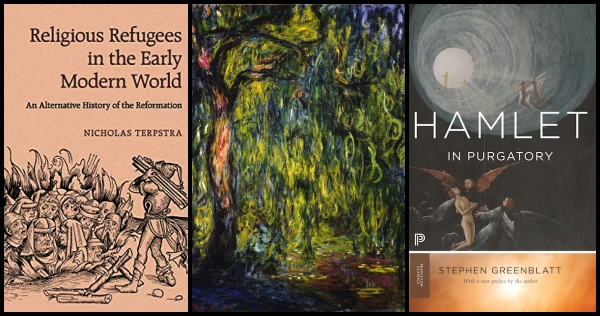
Image
Ophelia hangs coronets on a willow . Why a willow? One of the older known willow poems is Psalm 137,[1] about Israelites taken captive to Babylon, forced to sing for their captors. They hung their harps on willows [2]: "How shall we sing [...] a song of the Lord in a strange land?" [3] “Babylon” became a Protestant metaphor for the corruption of Roman Catholicism in continental Europe and in England under Catholic monarch Mary I. Protestants were internal religious refugees, captives in their own lands. When Protestant Elizabeth became queen, Catholics and Puritans became the new internal religious refugees. [4] Hamlet wants to go back to Wittenberg (associated with Luther), but Claudius and Gertrude oppose it. The censors and master of revels would never allow a play about England’s internal religious refugees (Protestant, Catholic, or Puritan), but Shakespeare could have his prince and internal refugee say,  “Denmark’s a prison.” (2.2.262) For internal religious refugees ...

Christopher Devlin's Catholic Bias in Hamlet's Divinity (part 13)

Image
Hamlet’s Divinity and Other Essays (Christopher Devlin, 1963) contains two chapters relating to Hamlet as well as a chapter making a case for Shakespeare’s Catholicism. Devlin was a Jesuit priest, and while I was raised Roman Catholic, I find him to be a bit too certain about plucking the heart of the mystery of Shakespeare’s faith. Yet Devlin demonstrates a great knowledge of history and literature, and in a field where for too long Protestants advanced too many of their own assumptions about Shakespeare’s faith, Catholic voices like Devlin’s opposing the status quo played a helpful role. [Image: Author photo. Hamlet's Divinity and Other Essays by Christopher Devlin (d.1961), with an introduction by C.V. Wedgwood. Published 1963. This book is out of print but still available at libraries and in used copies.] In his title chapter, “ Hamlet ’s Divinity” (30-43), Devlin argues that there are various ways he finds divinity to be present in the play. A major element for him is ...