Posts

Showing posts with the label Wicked Uncles

More Egyptian connections in Hamlet besides Herod tale
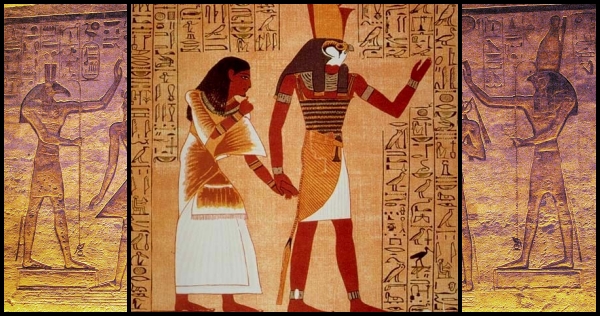
Image
During the season (and "twelve days") of Christmas, it may be good to consider Egyptian connections in Shakespeare’s Hamlet. Prince Hamlet references “Herod,” one of whom (Herod the Great) supposedly precipitates the flight of Mary, Joseph, and Jesus into Egypt after Joseph was warned in a dream. Some Christians take this story as historically true, while others think the writer of the Matthew gospel wished to paint Jesus as a new Moses, so the story may likely be religious fiction that attempts to make a point for the sake of religious instruction (catechesis). Herod wishes to eliminate his successor, foreseen in prophecy, like Laius getting rid of his son Oedipus, and Claudius arranging for the death of Prince Hamlet. But the Egyptian connection may be much older than Herod. As some students and scholars of comparative literature have already noticed, the oldest sources for Shakespeare's Hamlet may be Egyptian, and much older than Saxo Grammaticus (1200 CE). Here'...

Wicked Uncles: Notes on Asimov on Hamlet, Part 1

Image
The science fiction writer Issac Asimov has a two-volume work on Shakespeare, first published in two volumes in 1970, and later (as in my 1978 library copy) published in one fat book, two volumes in one. It has a Wikipedia page whose section on "Reception" has the following probably quite accurate quote: Fans of Asimov's science-fiction generally have little taste for door-stopper books such as Asimov's Guide to Shakespeare or The Shaping of England, and specialists are never happy to see clever outsiders make hay in their fields. — Peter Temes The edition that combines both volumes into one book might especially be termed a "door stopper" book, as it's fat and heavy enough to fill that purpose. But it's also true that at least some Shakespeare specialists tend to prefer to quote other Shakespeare specialists, and therefore might consider Asimov as an outsider and therefore view his work on Shakespeare unfavorably. Asimov's book (or the sec...