Posts

Showing posts with the label Multiverse

MORE PARTICIPANTS AT SAA DENVER 2026

Image
MORE PARTICIPANTS AT SAA DENVER 2026 My previous post named members in my seminar (Shakespeare and the Forms of Religion), but I met many other wonderful scholars in Denver for The Shakespeare Association of America 2026 conference. Here are six more:  TOP (L-R):  EVELYN GAJOWSKI is an author and one of the most prolific Shakespeare essay collection editors today. [1]  ARNIE PERLSTEIN has long been a strong supporter of my work, and was presenting in a workshop on the afterlives of The Taming the Shrew. His focus was on Shakespeare’s influence on Jane Austen in works like Pride and Prejudice and he has a blog about Jane Austen’s works. [2] RICHARD STRIER (emeritus, U. of Chicago) has written a number of books that have had a profound effect on my thinking [3]. Strier nicely distinguishes between common scholarly assumptions and facts related to texts:  “Interpretive conclusions, even widely held ones, do not become facts. That Hamlet delays in killing Claudius is a...

Hamlet's Baptista and the Multiverse of Allusions

Image
In Shakespeare's England, the 3rd and 4th Sundays of Advent (before Christmas) featured John the Baptist [1], a prophet referred to in Hamlet. The name is feminized to "Baptista" and given to the player queen in 3.2. Hamlet claims "The Mousetrap" or "Murder of Gonzago" was an existing ("extant") historical tale [2]. In fact a Duke of Urbino (not Vienna) was poisoned; Eleanor Gonzaga was his wife. The wife of a predecessor was Battista Sforza [3]. Shakespeare made historical errors on purpose: Hamlet picks the duke’s predecessor’s wife’s name to borrow the name Baptista, so he can allude to John the Baptist, who condemned the marriage of Herod Antipas to his brother's divorced wife [4]. Hamlet wants to catch the king's conscience [5], but must avoid being too confrontational, so he borrows "Baptista" to subtly evoke (but also cleverly distract from) a biblical allusion to Jesus’ kinsman [6] who was beheaded for opposing a k...

Part 1: Hamlet's uncle "Claudius" as lame, satyr, & polysemous

Image
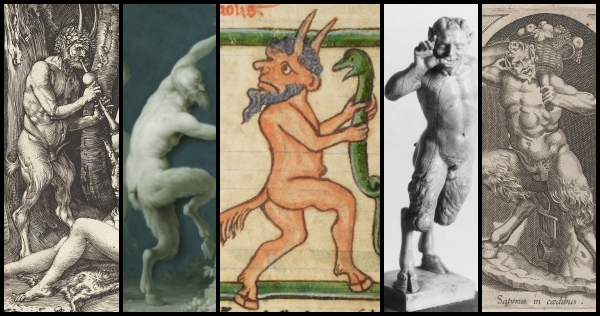
Last week I hinted at reasons why Shakespeare may have named Hamlet’s uncle Claudius. Consider a prerequisite: Too many people limit thinking to binaries, either-or, yes-no, treating words like “Claudius” as ciphers with a single meaning, an allusion to one historical or literary figure. The trick is not to decode a single meaning, but to embrace multiple possibilities, like stepping into a multiverse [1], or what Julia Kristeva and others call “intertextuality” [2]. The name “Claudius” can mean more than one thing (can be polysemous), each meaning relevant in its own way. Next, note that “Claudius” can mean “lame” [3]. Maybe King Hamlet’s brother was disabled and was thought less fit for rule than his brother, like Richard III (of hunched-back fame, blamed in another Shakespeare play for killing the young princes in the tower, getting rightful heirs out of his way). First, “Claudius” can mean “lame” [3] Maybe King Hamlet’s brother was disabled and was thought less fit for rule than hi...