Posts

Showing posts with the label COVID-19

Conflicting Goods & the COVID-19 Crisis in Reopening US Schools
Image
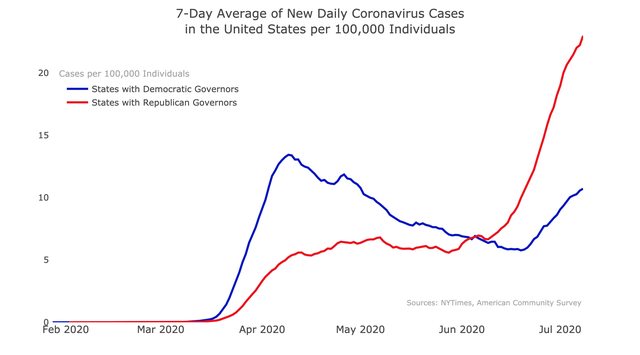
In Paul A. Cantor’s insightful introduction to the Cambridge University Press Hamlet (2004, 2012) , he notes a number of things that made me think of the current conflicts in the US over whether students should return to school in the fall. Cantor notes the definition of tragedy in Hegel's Aesthetics , not as a conflict of good and evil, but as a conflict of two goods. Cantor notes, "A straightforward confrontation of good and evil is a fundamentally melodramatic situation. If good triumphs we rejoice, and if evil triumphs we lament, and in either case our sympathies are clear-cut and there is nothing in the outcome to perplex us. But in a dramatic situation in which both sides have a legitimate claim on our sympathies, no outcome can provide a simple resolution of our feelings. No matter which side wins, we feel that something good has been defeated or destroyed." (12) This may oversimplify, because in Hamlet , we have more than two characters, and more than two t...
Honoring the (Sometimes Dishonorable) Dead in Hamlet, the Oedipus Cycle, & in a Time of Pandemic

Image
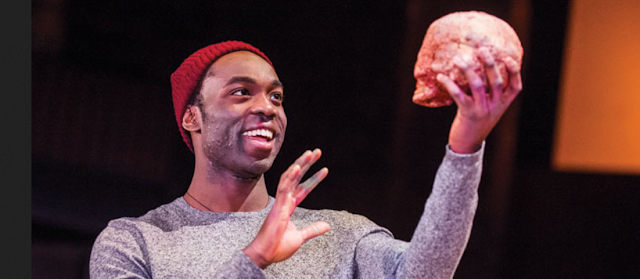
Why do we honor the dead? How might we best honor them, if while living, some of them greatly dishonored themselves? What if their dishonorable actions are hidden behind a veil of family lies or state propaganda? In Hamlet as well as other famous works of literature, honoring the dead, usually the dead kings or princes, sometimes by avenging their deaths or bringing murderers to justice, is a recurring theme. I was reminded of this yet again over the past two weeks by watching the 2018 Shakespeare’s Globe production of The Two Noble Kinsmen by William Shakespeare and John Fletcher. In The Two Noble Kinsmen , three queens complain that their husbands have been dishonored by being left unburied after battle, echoing a theme from Antigone in the Oedipus cycle. In Hamlet , the prince feels his mother and uncle have dishonored his dead father by not mourning long enough, and by what would have been considered a biblically incestuous marriage in Shakespeare’s England. Honoring the dead wa...

Covert Claudius, Confirmation Bias, Collateral Damage, and Coronavirus

Image
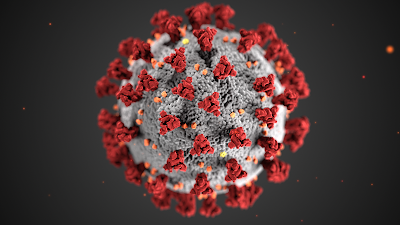
[My blog posts usually explore some aspect of Shakespeare’s text of Hamlet. This week I hold up the play as a mirror to our times: Claudius used “juice of cursed hebona in a vial” to kill his brother, a kind of chemical- or bio-weapon. But he lied: government propaganda claimed his brother was bitten by a snake, blaming nature for the killing. In our own time, Chinese officials claim COVID-19 was brought to China intentionally by the US military during war games there in October, 2019, after a bioweapons lab in the US failed an inspection and was closed that August. The US (US-friendly media) claim the virus came from a bat and a market where wild meat was sold (as if from a snake in nature’s garden). Nature creates many deadly viruses. But many countries, including the US, have a history of taking germs from nature and developing them as bioweapons. (A recent book notes that Lyme Disease may have accidentally escaped from a bioweapons lab at Plum Island on the US east coast th...