Posts

Showing posts with the label painting

Balthasar and Epiphany in Shakespeare and Renaissance Paintings
Image
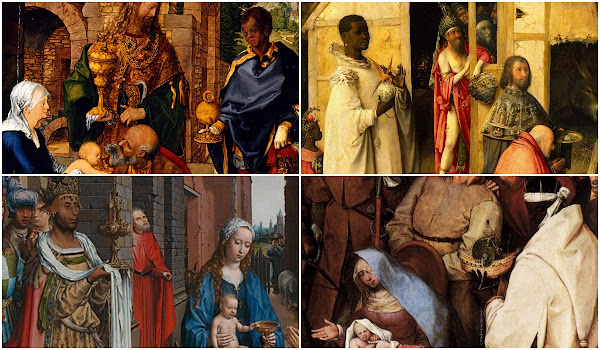
In a December 2020 article, Jonathan Jones explained how the idea of a black Balthazar among the magi or wise men visiting Jesus was an idea that began to blossom in the Renaissance among painters who portrayed the scene.[1] "Balthazar" was a new name given to the biblical Daniel. In a text attributed to the Venerable Bede of Northumbria (672/3 – 735), Balthazar was identified as coming from Africa, yet Jones claims that many in Bede’s time had little concept of what color skin an African might have. As Renaissance Europeans became more exposed to people from other parts of the world, the imagining of Balthazar as black expanded with the help of paintings. Jones notes, “Behind those dark daubs of paint lay a new curiosity about people and about peoples: the ‘humanist’ thinking of the Renaissance that inspired the great French philosopher Montaigne to declare that all global customs and beliefs are equally valid.” Given this expanding awareness, it is perhaps no surp...
In service of art: How visual arts may have influenced the Lazarus theme in Hamlet - part 18

Image
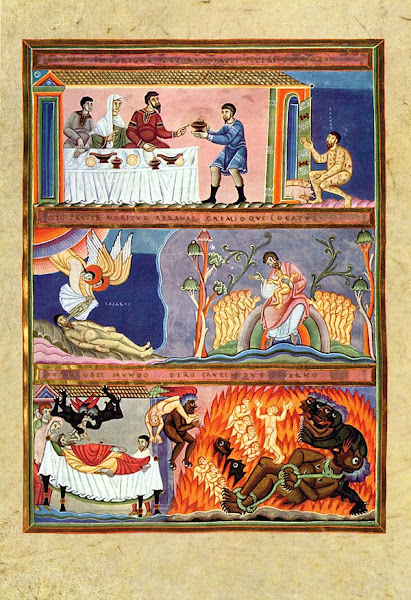
VISUAL ART INFLUENCING THE LAZARUS THEME IN HAMLET Scholars often think of how texts influence other texts. But what about other arts influencing texts? Some scholars consider this, but it seems that they are not in the majority. By the time Shakespeare wrote or revised his version of Hamlet for the stage, the Luke 16 tale of the rich man and Lazarus already had centuries of history of being interpreted in many forms, perhaps not only for a folksong-ballad whose origins may be older than Shakespeare ,* but also by sculptors and artists. * ( Another reference regarding an Elizabethan version of the ballad, noted by Bronson : "Bronson (Vol. II, p. 17) writes: "CHILD NO. 56: As Child's note informs us, something on the order of this ballad was in print in early Elizabethan times, and seventy-five years later was still matter for common allusion as 'the merry ballad of Diverus and Lazarus.' No early text survived, how ever, and Child had to resort to nineteenth-c...