Posts

Showing posts with the label Confirmation Bias

INDEX: Religious Biases in Hamlet Scholarship

Image
Series on Religious (and a few other) Biases in Shakespeare Scholarship: In 2022, I did a series exploring the biases of various Shakespeare and Hamlet scholars, many of them Protestant or Catholic. The first post in the series includes a more thorough introduction: 1. Biases & Assumptions Influence What We Notice, Seek, or Neglect - 11 January, 2022 https://pauladrianfried.blogspot.com/2022/01/biases-assumptions-influence-what-we.html 2. Religious Bias in Shakespeare/Hamlet Scholarship - 18 January, 2022 https://pauladrianfried.blogspot.com/2022/01/part-2-factors-contributing-to.html 3. Victors Wrote the Histories of Shakespeare and Francis of Assisi - 25 January, 2022 https://pauladrianfried.blogspot.com/2022/01/victors-wrote-history-of-shakespeare.html 4. Biblical Seeds of Secular Shakespeare Bias - 1 February, 2022 https://pauladrianfried.blogspot.com/2022/02/biblical-seeds-of-secular-shakespeare.html 5. Catholic Bias in Simon Augustus Blackmore - 8 February,...
Catholic Bias in Simon Augustus Blackmore (Part 5: Religious Bias in Shakespeare Scholarship)

Image
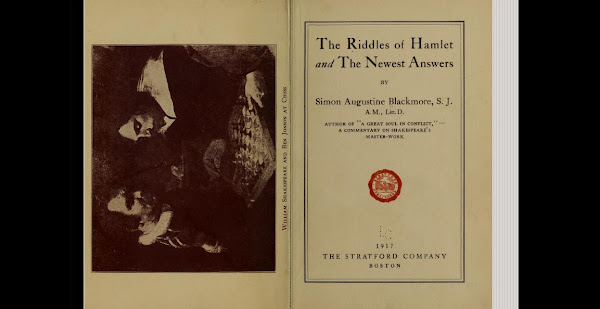
Simon A. Blackmore, a Jesuit priest, wrote a lengthy work called The Riddles of Hamlet and the Newest Answers (1917). He demonstrates his own unique bias, including the assumption that Shakespeare was Catholic. The book can be read for free online ; its title is reminiscent of the Baltimore Catechism (1885), which imagined in advance all the questions that the faithful might ask which the church believed most important, and then offered definitive answers. This is a far cry from more recent scholars who observe that the play raises more questions than it answers. While the book contains many helpful insights, it is also deeply problematic. Examples: 1. Blackmore (like other Catholic scholars) is very happy that the play seems to offer a ghost from purgatory (17, 142 n., 152-4, 262, 387), mostly neglecting that the ghost may be a devil in disguise (not an impossibility for Catholics, but something he’d rather avoid) 2. Blackmore resists the idea that Hamlet as a student at Wit...

Biases in Shakespeare/Hamlet Scholarship (Part 2: Secular/Universal Bias)

Image
Given the fact that Shakespeare wrote during the English Reformation, a time of great conflict over religion, and given the many biblical and religious references scholars find in his plays, what factors may have come together to create the strong secular bias in criticism—especially in the early centuries after Shakespeare's death, but also persisting today? What factors may have led critics to claim that Shakespeare was more interested in universal truths than in the important political and religious issues of his time, for which some risked execution? [ Murder Most Foul: Hamlet Through the Ages , by David Bevington. Oxford University Press, 2011 . Fair use.] 1. Laws prohibited Shakespeare from writing too explicitly about certain religious and political topics. His silence on some of these topics resulted in ambiguities that may have been misread as disinterest, favoring universal and secular truths. 2. If Shakespeare had religious and political opinions at odds with the...

Biases & Assumptions Influence What We Notice, Seek, or Neglect (Part 1)

Image
Our biases and assumptions will influence what we notice, seek, or neglect. I have been thinking about bias in recent weeks, in part because I came across two articles from late 2018 about a visit by Rowan Williams (former Archbishop of Canterbury) to Notre Dame. He gave a keynote lecture titled “‘Relieved by Prayer’: Power, Shame and Redemption in Shakespeare’s Drama.” The lecture is available on Youtube and was also scheduled to be published in Religion and Literature Journal . The lecture itself begins about 6 minutes in, and goes until about the 50 minute mark, although the introductions take a while and some discussion follows. What caught my attention was that the news items described the keynote as part of a series called “The Catholic Artistic Heritage,” as if assuming Shakespeare was Catholic. Yet the two news items ( here and here ) did not quote Rowan Williams as mentioning anything about Shakespeare’s institutional-religious allegiancesas leaning Catholic, but the fu...

Covert Claudius, Confirmation Bias, Collateral Damage, and Coronavirus

Image
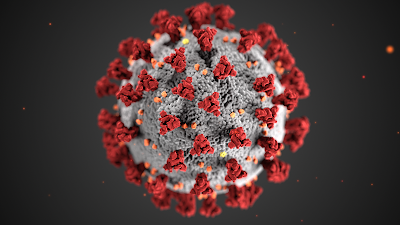
[My blog posts usually explore some aspect of Shakespeare’s text of Hamlet. This week I hold up the play as a mirror to our times: Claudius used “juice of cursed hebona in a vial” to kill his brother, a kind of chemical- or bio-weapon. But he lied: government propaganda claimed his brother was bitten by a snake, blaming nature for the killing. In our own time, Chinese officials claim COVID-19 was brought to China intentionally by the US military during war games there in October, 2019, after a bioweapons lab in the US failed an inspection and was closed that August. The US (US-friendly media) claim the virus came from a bat and a market where wild meat was sold (as if from a snake in nature’s garden). Nature creates many deadly viruses. But many countries, including the US, have a history of taking germs from nature and developing them as bioweapons. (A recent book notes that Lyme Disease may have accidentally escaped from a bioweapons lab at Plum Island on the US east coast th...

Still Glowing from RMMRA-Denver

Image
The Rocky Mountain Medieval & Renaissance Association (RMMRA) conference in Denver, April 11-13, was amazing, very thought-provoking and affirming, so while still glowing, I wanted to share a few things about how it went and what impressed me. First, I volunteered to chair a session about male shame and honor in medieval texts, including the poem, "Sir Gawain and the Green Knight." Three graduate students in the Institute for Medieval Studies at The University of New Mexico presented papers. To prepare, I read some literature on the psychology of shame, and also reviewed some literature on gift economies (Lewis Hyde's The Gift: Imagination and the Erotic Life of Property , a cult favorite). The presenters seemed to assume at first that it was a binary: Either honor or shame, and that this was mostly related to warrior culture. In fact, I found that gift dynamics are inextricably tied in with these other dynamics of violence, honor, and shame, and I would go so far a...

RMMRA Denver topic: PROTESTANT, EMPIRICAL, & CONFIRMATION BIASES IN SHAKESPEARE & THE BIBLE, AND HOW WE MIGHT TRANSCEND THEM

Image
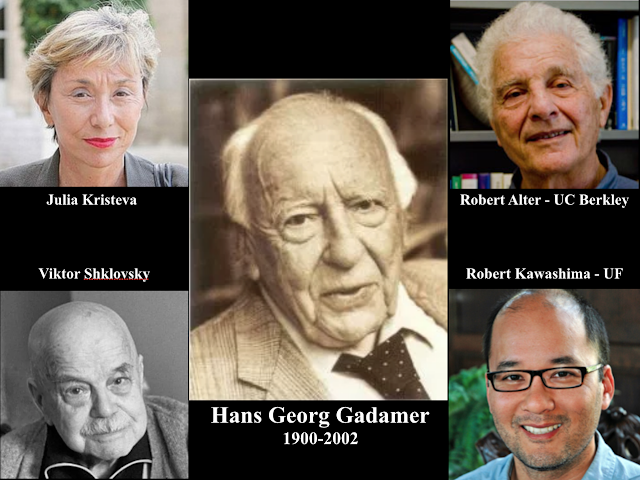
This week I am headed to Denver, Colorado, for a meeting of the Rocky Mountain Medieval and Renaissance Association (instead of attending the Shakespeare Association of America conference in Washington D.C., which was tempting for its proximity to the Folger Shakespeare Library). I am presenting a paper called “How Gadamer Might Rethink Shakespeare & the Bible,” in which I consider how a Protestant bias of “Scripture Alone” (Sola Scriptura), and an empirical bias of the emerging sciences in the mid-1800s, established an early tradition that favored very literal references in biblical allusions that utilized biblical names and phrases, over paraphrase and plot echo, which are often relatively neglected by many of the main reference books in the field. (Darwin's book, On the Origin of Species , was published just five years before Charles Wordsworth's 1864 book on Shakespeare and the Bible, and it, too, is obsessed with empirical evidence and close observation). These b...