Part 18: A mote in Ophelia’s eye met with Gertrude's merciful fiction?
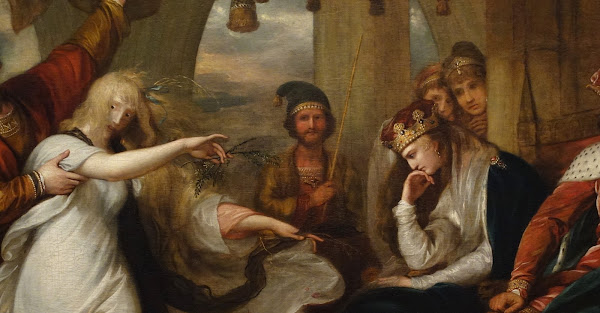
What if Gertrude lied about Ophelia’s death? In a previous post on Ophelia (Part 16), I explored the idea that Gertrude’s story in 4.7 of Ophelia’s death might be true: Ophelia died because a willow branch on which she was standing broke; once in the water, she accepted the possibility of her approaching death in faith, apparently according to Christian expectations of the time.This seems consistent with many aspects of Ophelia’s last scene (4.5). Some note: Gertrude’s account has so much detail, but no one tries to save Ophelia. Can we trust Gertrude’s account? If Gertrude’s account of Ophelia’s death in 4.7 is a fiction, a lie (bearing false witness, a sin in the eyes of Elizabethan Christians [1]), how might we best understand it? 1. As a lie of self-interest, to avoid Laertes’ rage and prevent him from killing Claudius and Gertrude herself, declaring himself king with the mob’s support? 2. To preserve the state and public order, to prevent casualties that might come from a revolt? ...