Posts

Showing posts with the label black plague

"Plague" in Hamlet 3.1
Image
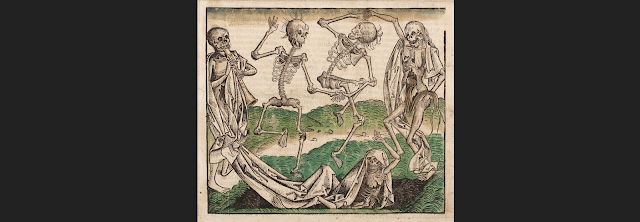
The word “plague” is used in very interesting ways in Shakespeare’s Hamlet, and an examination of each instance in its context in the play as well as the historical context is quite revealing. [Michael Wolgemut, “Image of Death” from The Nuremberg Chronicle (1493), woodcut with watercolor, 14 7/16 x 10 5/16 inches (courtesy Blanton Museum of Art, the University of Texas at Austin, the Karen G. and Dr. Elgin W. Ware, Jr. Collection)] LAST WEEK I listed a number of words that may have been associated with highly contagious and deadly diseases, their number of occurrences in Shakespeare’s work overall, and their numbers of occurrences in Hamlet. These words included the following: Plague; Contagion; Pestilence/Pestilent; Sick; Ill; Pox; Blister; Forehead (not an exhaustive list). This week I’ll focus just on the word “plague” in Hamlet, and just on the first of two instances. Here’s the count again for how often the word appears in Shakespeare’s writing overall, and how ofte...
Plague, Pox, & Disease in Shakespeare

Image
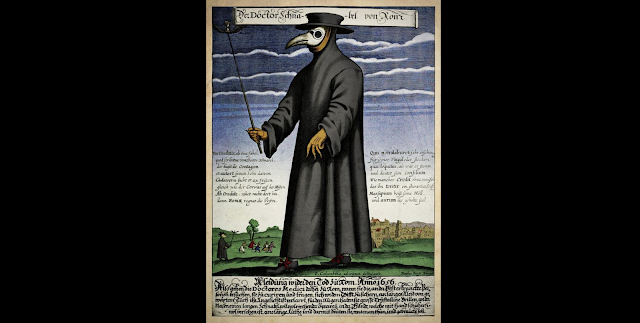
Words like “Plague,” “Contagion” and “Pestilence” occur in Shakespeare’s works a surprising number of times, and that includes Hamlet. Because of the Covid-19 crisis, my readers may already have noticed that media outlets and Shakespeare organizations are sharing and re-publishing articles about black plague and smallpox in Shakespeare’s lifetime. [Copper engraving of Doctor Schnabel (i.e., Dr. Beak), a plague doctor in seventeenth-century Rome, circa 1656, public domain, Wikipedia ] With all of the changes in the world and in my state of Minnesota, with school closings, and conferences and sporting events canceled, I decided it was time to do a little research about Shakespeare and the plague and the pox, as well as some research about occurrences of these words often associated with them. Web Resources Among the many good web resources on plague, smallpox, and diseases mentioned in Shakespeare, here are a few of my favorites: James Shapiro: “How Shakespeare’s great escape f...