Posts

Showing posts with the label sea-voyage

Works vs. Faith in Hamlet: Changeling Letter vs. the Mercy of Pirates

Image
When Shakespeare's Hamlet was first produced, a hot topic in reformation England was faith vs. works: Are we justified in the eyes of heaven by our faith, or our works? All English Christians (Catholic, Protestant, and others) used bible translations featuring St. Paul who wrote of salvation by faith (e.g. Romans 3:28, 5:1; Galatians 2:16). But a letter of James said that "faith without works is dead" (2:14-26) and that "a person is justified by works and not by faith alone" (v.24). This apparent contradiction is similar to what Shakespeare's Richard II notes while imprisoned, comparing what seem to be incompatible scripture phrases: "...thoughts of things divine, are intermixed With scruples, and do set the word itself Against the word..." (5.5.12-14). On faith v. works, Protestants preferred Paul's formulations, while Catholics preferred James. Events on Hamlet's sea voyage relate to this debate without ever using the words “faith” or “...

SOME HISTORICAL BACKGROUND OF THE JONAH ECHO in HAMLET

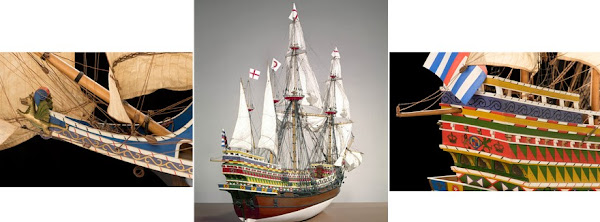
SOME HISTORICAL BACKGROUND OF THE JONAH ECHO in HAMLET The Jonah echo is perhaps better understood with consideration for the following (not an exhaustive list):  a) The success of A Looking Glass for London and England (c. 1590); see Hannibal Hamlin, Staging prophecy: A Looking Glass for London and the Book of Jonah,"Part III, chapter 10 in Enacting the Bible in Medieval and Early Modern Drama, Eds. Eva Von Contzen and Chanita Goodblatt, Manchester University Press, 2020. b) Elizabeth’s having dedicated one of her naval ships “Elizabeth Jonas” (1559) with a speech that exhibited poor biblical exegesis than propaganda;  "The 3 day of July, 1559, the Queen's Grace took her barge at Greenwich unto Woolwich to her new ship, and there it was named Elizabeth Jonas, and after her Grace had a goodly banquet, and there was great shooting of guns, and casting of fire about made for pleasure ' (Diary of Henry Machin, Camden Society, p. 203). The ship ' was so named by her ...

Part 49: Ophelia, Hamlet, Water, and Rites of Passage

Image
Ophelia and Hamlet are an interesting variation on a recurring Shakespeare theme, almost willing to elope like Romeo and Juliet, or Othello and Desdemona, but not willing to disobey Polonius’ parental authority once he expresses disapproval. In stark contrast with the sins of Claudius, at first the play displays children submitting to authority: Ophelia to Polonius [1]; Hamlet to his mother (no return to Wittenberg [2]) and to the ghost (to obey and avenge [3]); Laertes seeking parental and royal approval before returning to France [4]. Forbidden contact with Hamlet [5], but used as bait for spying [6], Ophelia resembles Viola disguised as Cesario in Twelfth Night , tasked as messenger for Duke Orsino, but in love with the duke. Blameless, obedient, but scolded, ordered “to a nunnery” [7], she resembles Hero in Much Ado About Nothing , victim of deception and misunderstanding, rejected by her betrothed.  Hamlet made to her “almost all the holy vows of heaven” [8], probably a be...

The Elizabeth Jonas, and Hamlet's sea-voyage: Other Considerations

Image
In my previous post , I connected the Jonah echo in Hamlet’s sea voyage to Elizabeth I having christened a navy ship “Elizabeth Jonas,” saying how God had saved her from her enemies - although the only enemy of Jonah is Jonah himself, fleeing his divine calling. The records have more echoes of Hamlet : "The 3 day of July, 1559, the Queen's Grace took her barge at Greenwich unto Woolwich to her new ship, and there it was named Elizabeth Jonas, and after her Grace had a goodly banquet, and there was great shooting of guns, and casting of fire about made for pleasure ' (Diary of Henry Machin, Camden Society, p. 203). The ship ' was so named by her Grace in remembrance of her own deliverance from the fury of her enemies, from which in one respect she was no less miraculously preserved than was the prophet Jonas from the belly of the whale' (Egerton MS. 2642, f. 150). This refers, of course, to the Jonas." [1] In Hamlet, there are also references to banqueting...

The Winter’s Tale & Hamlet: Common Themes & Political Concerns?

Image
If you have viewed the recently available Shakespeare's Globe production of The Winter's Tale (more information near the end of this blog post), you may have noticed many themes and story elements in common with Hamlet (and perhaps other Shakespeare plays as well). In fact, Hamlet and The Winter’s Tale share a number of important features that are perhaps instructive regarding the political interests and moral concerns of the time. [Image via Shakespeare's Globe] Consider: Both Hamlet and The Winter’s Tale are about what is appropriate mourning for the dead: - In Hamlet , the mourning by Gertrude of her husband's death, and by Claudius, of his brother's death, are too short in Hamlet's opinion. - In The Winter’s Tale , in spite of the real need for Leontes to demonstrate a very real repentance for his grave mistakes, the mourning may seem too long. - Hamlet involves suspected adultery, poisoning, conspiracy to poison, and revenge. - The Winter...