Posts

Showing posts with the label Central Christian Teachings

Hamlet's Warrior-Christian Dialectic
Image
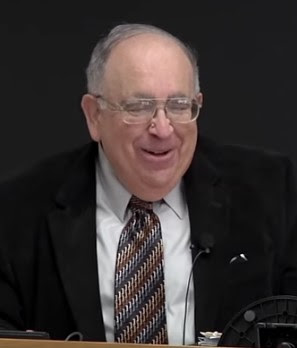
Two weeks ago, my blog post mentioned Paul A. Cantor’s insightful introduction to the Cambridge University Press Hamlet (2004, 2012) , including his use of Hegel's idea of Tragedy as conflicting ideas of the good. Cantor also does a good job not only identifying the importance of both Christian and classical allusions, but also of noting that Christian and Classical worldviews are in an uncomfortable dialectic in the play. [Paul A. Cantor, image from screenshot, Youtube ] In act 1, scene 2, Claudius describes Denmark not as a Christian state, but a "warlike state." The classical code of honor and revenge is demonstrated by the ghost's commission that Hamlet avenge his murder, and also by the first performance of a speech by the players about the story of Hecuba witnessing Pyrrhus's revenge on Priam. Christianity is demonstrated at many turns in the play, with allusions and plot echoes, from Horatio as the doubting Thomas of the first scene, to the very last ...

Christianity's central mysteries & teachings in Hamlet 1.1

Christianity's central mysteries & teachings in Hamlet 1.1: INCARNATION : Marcellus speaks of “ that season... / Wherein our Saviour's birth is celebrated.” The conception & birth of Christ claims God is not distant, but one like & among us (Emmanuel as "God-with-us," Mt1:22-23). TEACHINGS : Horatio says, “A mote it is to trouble the mind's eye,” which alludes to Mt 7:1-5 & Lk 6:41: take the plank from our own eye before taking the mote of dust from a neighbor’s eye; judge not that you be not judged. [P.S. The idea that we should judge ourselves before judging others is an extension of the second of two of the laws that Jesus identified as most important (love god, and love neighbor as self, or do unto others as you'd have them do unto you). The scripture passage that contains this "mote in the eye" reference also contains the "measure for measure" reference, a favorite of Shakespeare's, which became the title of ...