Posts

Showing posts with the label Dialectic

Hamlet & The Spanish Tragedy as a Conversation

Image
If you ask actors about the influences, differences, and similarities between Thomas Kyd's The Spanish Tragedy and Shakespeare's Hamlet , some may respond that one could never prove the nit-picking speculations of academics, and that both are revenge plays with plenty of material for actors to bring to life, and for audiences to be drawn in. Shakespeare was an entertainer, and he wanted to make a good living, so if he borrowed elements from Kyd, as long as the shows are a success with audiences and at the box office, everyone is happy. [Images: The Spanish Tragedy via Wikipedia ; Hamlet Q2, via Folger Shakespeare Library .] Of course, in a way, they're right. Actors still bring very old plays to life for audiences who are moved, again and again, by something not only in the scripts, but in the actors and the audiences themselves. When things come together well in a live performance, why dig and speculate about historical questions that might never be answered? And y...
Hamlet's Warrior-Christian Dialectic

Image
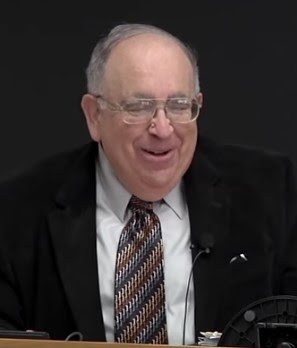
Two weeks ago, my blog post mentioned Paul A. Cantor’s insightful introduction to the Cambridge University Press Hamlet (2004, 2012) , including his use of Hegel's idea of Tragedy as conflicting ideas of the good. Cantor also does a good job not only identifying the importance of both Christian and classical allusions, but also of noting that Christian and Classical worldviews are in an uncomfortable dialectic in the play. [Paul A. Cantor, image from screenshot, Youtube ] In act 1, scene 2, Claudius describes Denmark not as a Christian state, but a "warlike state." The classical code of honor and revenge is demonstrated by the ghost's commission that Hamlet avenge his murder, and also by the first performance of a speech by the players about the story of Hecuba witnessing Pyrrhus's revenge on Priam. Christianity is demonstrated at many turns in the play, with allusions and plot echoes, from Horatio as the doubting Thomas of the first scene, to the very last ...