Posts

Showing posts with the label Paul A. Cantor

Hamlet & Aristotle's Poetics, Ethics, & Politics

Image
A feature of the period called the English Renaissance is its attention to Greek and Latin classical texts, which includes not only poetry and drama, but also philosophy - including Aristotle. Many students of Shakespeare are told to consider his tragedies in terms of Aristotle's poetics, which says that the main character has some tragic flaw which eventually brings out his downfall. But a number of elements in Hamlet invite us to scrutinize this limited approach. [L: Roman copy Greek bronze bust of Aristotle by Lysippos, c. 330 BC. R: Detail from the Chandos portrait of Shakespeare , 1610.] By this, many claim Hamlet's flaw is that his conscience makes him overthink and hesitate; but in fact as some scholars have recognized, many of his worst moments (his unkindness to Ophelia, his stabbing of Polonius) come from not thinking enough, not pausing before acting. If Hamlet simply kills Claudius at prayer, not only does he risk sending Claudius to heaven and failing at re...
Hamlet's Warrior-Christian Dialectic

Image
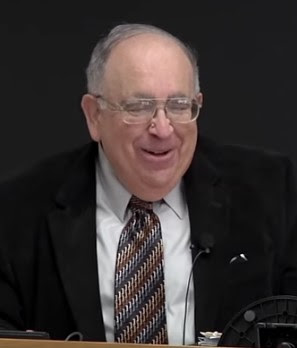
Two weeks ago, my blog post mentioned Paul A. Cantor’s insightful introduction to the Cambridge University Press Hamlet (2004, 2012) , including his use of Hegel's idea of Tragedy as conflicting ideas of the good. Cantor also does a good job not only identifying the importance of both Christian and classical allusions, but also of noting that Christian and Classical worldviews are in an uncomfortable dialectic in the play. [Paul A. Cantor, image from screenshot, Youtube ] In act 1, scene 2, Claudius describes Denmark not as a Christian state, but a "warlike state." The classical code of honor and revenge is demonstrated by the ghost's commission that Hamlet avenge his murder, and also by the first performance of a speech by the players about the story of Hecuba witnessing Pyrrhus's revenge on Priam. Christianity is demonstrated at many turns in the play, with allusions and plot echoes, from Horatio as the doubting Thomas of the first scene, to the very last ...

Conflicting Goods & the COVID-19 Crisis in Reopening US Schools

Image
In Paul A. Cantor’s insightful introduction to the Cambridge University Press Hamlet (2004, 2012) , he notes a number of things that made me think of the current conflicts in the US over whether students should return to school in the fall. Cantor notes the definition of tragedy in Hegel's Aesthetics , not as a conflict of good and evil, but as a conflict of two goods. Cantor notes, "A straightforward confrontation of good and evil is a fundamentally melodramatic situation. If good triumphs we rejoice, and if evil triumphs we lament, and in either case our sympathies are clear-cut and there is nothing in the outcome to perplex us. But in a dramatic situation in which both sides have a legitimate claim on our sympathies, no outcome can provide a simple resolution of our feelings. No matter which side wins, we feel that something good has been defeated or destroyed." (12) This may oversimplify, because in Hamlet , we have more than two characters, and more than two t...