Posts

Showing posts with the label Hamlet sources

THE CLAUDIUS-NERO CROSSROADS IN GERTRUDE'S CLOSET (Part 17, Claudius Series)

Image
Shakespeare’s Hamlet could have unfolded differently from Gertrude’s closet scene onward (3.4): Instead of following the Danish tale, it could have followed Nero’s story [1]. Shakespeare makes the tales overlap, grafting on references to Claudius and Nero; then he rejects that potential plot line and what such historical characters represent. To be a play based on an old Danish tale, or not? To be a play based on Rome’s Claudius I, Julia Agrippina, and her son Nero – or not? (Or in modern productions: To have Hamlet played by Ringo Starr, Nero’s doppelganger – or not? [See collage images….]) In Shakespeare’s time, what were Nero and Agrippina famous for? - Agrippina poisoned her husband, Claudius I, so that her son Nero could be emperor. - Nero later arranged for his mother’s death and attended her autopsy. - In Shakespeare’s 1 Henry VI , Lord Talbot claims that Nero played a lute while Rome burned, and Shakespeare refers to the Claudius-Agrippina-Nero tale in two other plays [...

Austin Tichnor on "Shakespeare’s sources transformed"

Image
Austin Tichenor offers a good, brief article on Shakespeare's repurposing of sources , available at the Folger Shakespeare Library website. He writes: "Charlotte Artese, author of Shakespeare and the Folktale, explained on the Folger’s Shakespeare Unlimitedpodcast that Shakespeare frequently refers to things that have little meaning to us now but would have been familiar to his audience then. Among her many examples, Artese cites Ophelia’s odd-seeming non-sequitur “They say the owl is a baker’s daughter” from her mad scene in Hamlet as referring to a folktale in which Jesus turns a baker’s daughter into an owl for giving him a meager portion of bread..." And as I've argued before, the tale of the baker's daughter changed to an owl might best be considered as a repurposing/transformation of the gospel tale about the rich man and the beggar Lazarus - which is referred to by the ghost regarding his "lazar-like" skin after poisoning - and also referred to...

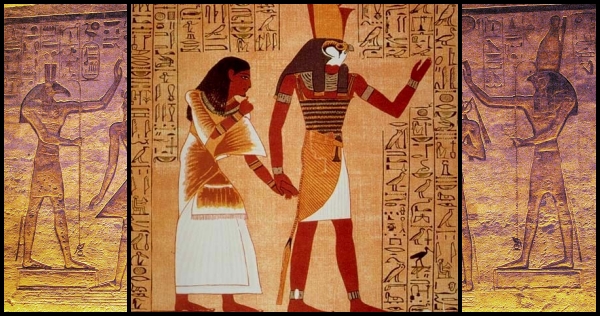
More Egyptian connections in Hamlet besides Herod tale

Image
During the season (and "twelve days") of Christmas, it may be good to consider Egyptian connections in Shakespeare’s Hamlet. Prince Hamlet references “Herod,” one of whom (Herod the Great) supposedly precipitates the flight of Mary, Joseph, and Jesus into Egypt after Joseph was warned in a dream. Some Christians take this story as historically true, while others think the writer of the Matthew gospel wished to paint Jesus as a new Moses, so the story may likely be religious fiction that attempts to make a point for the sake of religious instruction (catechesis). Herod wishes to eliminate his successor, foreseen in prophecy, like Laius getting rid of his son Oedipus, and Claudius arranging for the death of Prince Hamlet. But the Egyptian connection may be much older than Herod. As some students and scholars of comparative literature have already noticed, the oldest sources for Shakespeare's Hamlet may be Egyptian, and much older than Saxo Grammaticus (1200 CE). Here'...