Posts

Showing posts with the label The Golden Ass

More Egyptian connections in Hamlet besides Herod tale
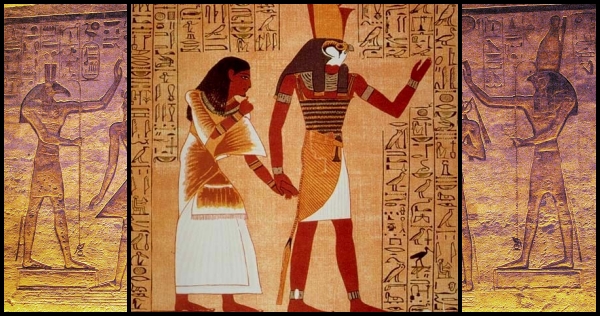
Image
During the season (and "twelve days") of Christmas, it may be good to consider Egyptian connections in Shakespeare’s Hamlet. Prince Hamlet references “Herod,” one of whom (Herod the Great) supposedly precipitates the flight of Mary, Joseph, and Jesus into Egypt after Joseph was warned in a dream. Some Christians take this story as historically true, while others think the writer of the Matthew gospel wished to paint Jesus as a new Moses, so the story may likely be religious fiction that attempts to make a point for the sake of religious instruction (catechesis). Herod wishes to eliminate his successor, foreseen in prophecy, like Laius getting rid of his son Oedipus, and Claudius arranging for the death of Prince Hamlet. But the Egyptian connection may be much older than Herod. As some students and scholars of comparative literature have already noticed, the oldest sources for Shakespeare's Hamlet may be Egyptian, and much older than Saxo Grammaticus (1200 CE). Here'...

Polonius, Apuleius, Will Kempe, & Hidden Lovers

Image
My blog entry last week dealt with Polonius, Jephthah, William Cecil, the Elizabethan Bond of Association, and the theme of bad vows in the Biblical Jephthah tale. This week I continue exploring ideas related to the character of Polonius: possible connections to Apuleius, author of The Golden Ass , a rambling tale (what some in the U.S. might characterize as a "shaggy dog tale") containing many diversions, perhaps resembling the verbal style of the royal counselor. [Title page from John Price's Latin edition of Apuleius' novel "Metamorphoses, or the Golden Ass" (Gouda, Netherlands, 1650). Public domain.] Shakespeare’s A Midsummer Night’s Dream especially shows familiarity with The Golden Ass , which is in part about a man changed into a donkey. [Lucius takes human form, in a 1345 illustration of the Metamorphoses (ms. Vat. Lat. 2194, Vatican Library). Public domain.] [ Edwin Landseer, Scene from A Midsummer Night's Dream (1851), public...