Posts

Showing posts with the label Religious Refugees in the Early Modern World

Part 27: Ophelia's Willow, Psalm 137, & Religious Refugees
Image
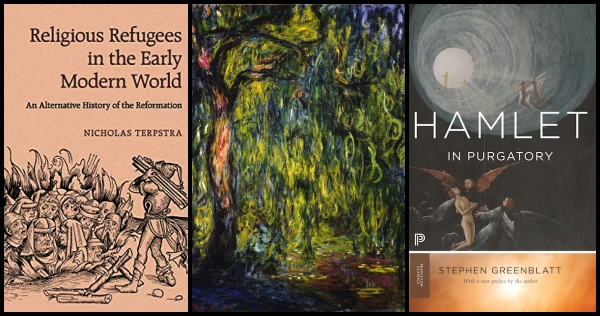
Ophelia hangs coronets on a willow . Why a willow? One of the older known willow poems is Psalm 137,[1] about Israelites taken captive to Babylon, forced to sing for their captors. They hung their harps on willows [2]: "How shall we sing [...] a song of the Lord in a strange land?" [3] “Babylon” became a Protestant metaphor for the corruption of Roman Catholicism in continental Europe and in England under Catholic monarch Mary I. Protestants were internal religious refugees, captives in their own lands. When Protestant Elizabeth became queen, Catholics and Puritans became the new internal religious refugees. [4] Hamlet wants to go back to Wittenberg (associated with Luther), but Claudius and Gertrude oppose it. The censors and master of revels would never allow a play about England’s internal religious refugees (Protestant, Catholic, or Puritan), but Shakespeare could have his prince and internal refugee say,  “Denmark’s a prison.” (2.2.262) For internal religious refugees ...
Meeting Debra Shuger, Richard Strier, and Nicholas Terpstra at SCSC

Image
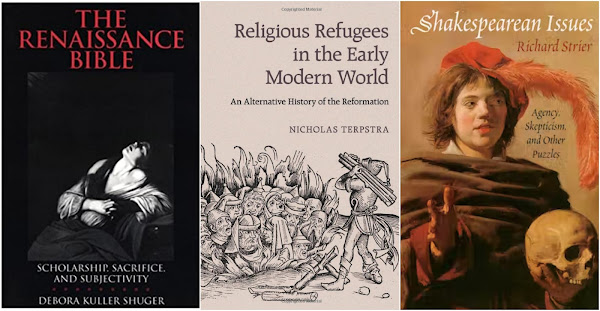
At the Sixteenth Century Society Conference convention in Minneapolis last week, I had many serendipitous meetings with scholar/authors. In a Friday session, “Literature and Religion in Early Elizabethan England,” one presenter cited a source claiming God the Father as defending the masculinity of Jesus. I was reminded of parts of Debora K. Shuger’s book, The Renaissance Bible: Scholarship, Sacrifice, and Subjectivity .[1] During Q&A time, I mentioned how Shuger’s book seemed to offer an alternative view. The presenter replied, “Do you know you are sitting right behind Debora Shuger?” So that is how I met Debora Shuger ,[2] who was kind and generous to talk with me then and later in the conference. I attended a roundtable on Thursday night called “Crisis And Refuge: Historical Reflections On War, Persecution, And Exile.” I had started reading Nicholas Terpstra’s book, Religious Refugees in the Early Modern World: An Alternative History of the Reformation .[3] Terpstra[4] wa...