Posts

Showing posts with the label Toxic Masculinity

Part 23: Queen Ophelia and the male gatekeepers defining her madness
Image
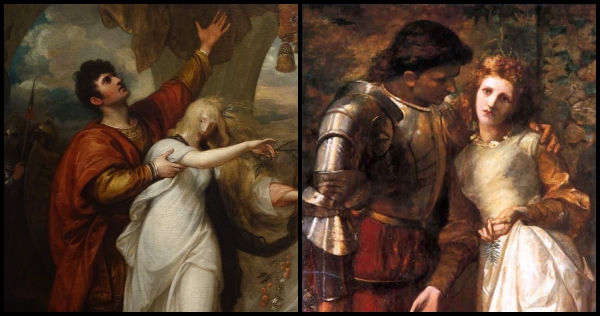
Ophelia is too often portrayed as limp, soft, and either blank-eyed in her apparent innocence, or wide-eyed in her madness, as shown in these paintings by William Gorman Wills (c.1880) and Benjamin West (detail, 1792). This is based more on artistic and dramatic assumptions than on the text of the play. When we first see her brother Laertes in 1.2, he is reluctant to speak in an audience with the king who asks him repeatedly about his requested permission to return to France and scolds him for his shyness:   CLAUDIUS: What is ’t, Laertes? You cannot speak of reason to the Dane And lose your voice. What wouldst thou beg, Laertes, That shall not be my offer, not thy asking? [...] What wouldst thou have, Laertes? (1.2.43-51) Claudius is a bully, and also bullies Hamlet later in the same scene about his mourning of his father. (1.2.96-109) But Ophelia in her “mad” scene shows no shyness, and asks the first question: OPHELIA: Where is the beauteous Majesty of Denmark? (4.5.26) And if Ha...

Laertes & Hamlet Fight at Ophelia’s Grave, 5.1: (Part 8) Labors of Gratitude and Regret in Hamlet

Image
This is the latest installment in a multi-part series examining how characters interact in Hamlet, offering opportunities, gifts, planting seeds for future inspiration, or for changes of heart & mind. It follows ideas from Lewis Hyde (“The Labor of Gratitude,” a chapter in his book, The Gift: Imagination and the Erotic Life of Property ). For more notes on the series and an index of previous posts in this series, see the end of this post. Laertes & Hamlet Fight at Ophelia’s Grave, 5.1 (part 8, Labors of Gratitude & Regret in Hamlet ) (continued from the previous weeks' posts) Act 5, scene 1 of Shakespeare's Hamlet is a rich and problematic scene: Hamlet has returned from his Jonah-like sea voyage but doesn’t seem to have been informed by Horatio of Ophelia’s death. The Queen previously gave an account of Ophelia’s drowning that seemed to blame the broken branch of a tree she was on, and the water that made her clothing heavy. But now in 5.1 we get more meanin...

Toxic Masculinity Distracts While Ophelia Drowns, 4.7: (Part 7) Labors of Gratitude and Regret in Hamlet

Image
Part 7: Laertes' Labors of Gratitude & Regret: Toxic Masculinity Distracts While Ophelia Drowns ( Hamlet 4.7) This is the latest installment in a multi-part series examining how characters interact in Hamlet, offering opportunities, gifts, planting seeds for future inspiration, or for changes of heart & mind. It follows ideas from Lewis Hyde (“The Labor of Gratitude,” a chapter in his book, The Gift: Imagination and the Erotic Life of Property ). For an index of previous posts in this series, see the end of this post. Sorting Out Hamlet 4.7 The seventh scene of Act Four in Hamlet may seem packed with superfluous details that could be (and probably often are) cut: It’s a long play; usually, cuts are made. Laertes still has questions about his father’s death: if Hamlet intended to kill Claudius, then why didn’t Claudius take action against Hamlet? Claudius shares more flattery with Laertes, conveying to Laertes some things Claudius claims (truthfully or not) that Haml...