Posts

Showing posts with the label The rest is silence

WHY CLAUDIUS GOES UNNAMED EXCEPT IN STAGE DIRECTION (part 16, Claudius series)

Image
CLAUDIUS UNNAMED: Why – at the end of the reign of Elizabeth I – would Shakespeare have characters in Hamlet be silent regarding the king’s name, in a play involving an “incestuous marriage” in which the king marries his older brother’s widow? Some things could not be named. In the minds of audiences, the incestuous marriage would seem uncomfortably close to the first marriage of Henry VIII. For similar reasons, Richard II could not include the deposition scene when first published [1], and Shakespeare’s collaboration with John Fletcher on Henry VIII was not written or enacted until 1613 [2]. Why? Censorship, fear, and tact. Everyone knew that - Henry VIII, Elizabeth’s father, had married his older brother’s widow, and later divorced her, claiming it an incestuous marriage… - and that Elizabeth was sometimes called a “bastard queen”: Henry and Anne Boleyn had conceived Elizabeth out of wedlock; Elizabeth was born only three months after a secret marriage, making her ineligible in th...
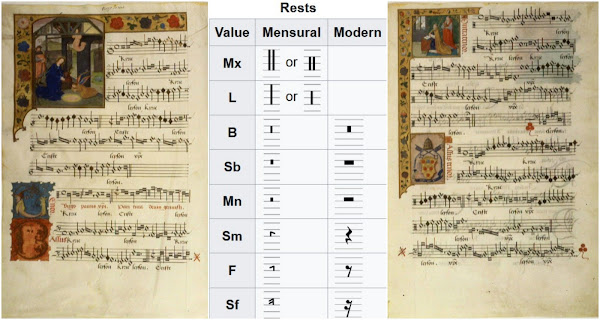
"The rest is silence": Musical Notation, Nihilism, and Ambiguity

Image
"The rest is silence." When Shakespeare scholars write about Hamlet's last words, more often than not, their focus is that Hamlet is being serious, even nihilistic. Too few critics and scholars consider that Hamlet is making a musical pun for Horatio (and for theater audiences) with his last breath: The rest (in musical notation) is silence. Hamlet is, after all, not only the son of King Hamlet and Queen Gertrude, but also the spiritual offspring of Yorick the fool. His first words in the play involve a sarcastic pun: His uncle Claudius calls Hamlet his son, and Hamlet says he is “too much in the sun.” (1.2.69) [1] He makes fun of Polonius, who deserves it: POLONIUS: What do you read, my lord? HAMLET: Words, words, words. POLONIUS What is the matter, my lord? HAMLET Between who? POLONIUS I mean the matter that you read, my lord. HAMLET Slanders, sir; for the satirical rogue says here that old men have gray beards, that their faces are wrinkled,...