Posts

Showing posts with the label methodology

(Part 12) TRY THIS: One Method for Considering Biblical Allusions
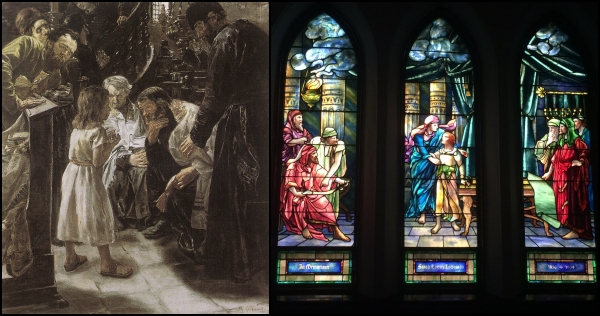
Image
~~~~~~~~~~~~~~~~~~~~~~ INDEX OF POSTS IN THIS SERIES: https://pauladrianfried.blogspot.com/2023/01/index-hamlet-in-32-as-boy-jesus-lost.html ~~~~~~~~~~~~~~~~~~~~~~~~~~~~~~~~~~~~~~~~~~~~~~~~ In this recent series,[1] I’ve explored one scripture allusion in a Shakespeare play (Hamlet in 3.2 alluding to the boy Jesus among temple elders from Luke 2). Readers of literature can explore allusions on their own, or instructors can do so with their students. There are many ways to do this, many possible starting points. Below is an outline of the method I used in this series. In many ways I only scratched the surface. Some tasks listed below might benefit from working on as a whole group. Then a class might divide tasks # 3 - # 7 among groups, and then later meet to discuss results, before # 8. 1. IDENTIFY what seems to be a scripture allusion. - People long familiar with a religion’s sacred texts may have an advantage, but religious belief is not required to identify allusions. Fa...

Series conclusion: Hamlet & Jacob - part 4

Image
In this series of posts on Jacob and Hamlet, I’ve suggested that in Shakespeare’s play, certain elements in the text and its themes are either allusions to the biblical Jacob-Esau tales, or show an influence of those tales on Shakespeare’s development of the play. [1] These include - Laertes’ use of the phrase, “double blessing” ( see part 1 ); - the possibility that Laertes is an Esau figure, while Hamlet and Ophelia might be viewed as Jacob figures ( see part 1 ); - the idea of poetic justice in Hamlet as in part influenced by its presence in the Jacob tales ( see part 2 ); - the importance of maternal approval for marriage, not only for Jacob, but also for Ophelia and Hamlet, with Gertrude’s voice of approval ( see part 3 ). The impulse of some might be to take Laertes’ phrase, “double blessing” (1.3.57-59) and consult Naseeb Shaheen’s “Biblical References in Shakespeare’s Plays” (1999) as authoritative, or even as the last word. But Shaheen is of very limited help, even m...