Posts

Showing posts with the label scholarship

Research is like raspberry picking

Image
We have raspberries in our backyard: red, black, and purple,[1] including four varieties of reds. They grow on canes: First year canes don't bear fruit; patience is required. Once fruited, old canes can be cut out to make room for next year's harvest. Berries start green, turn white-yellow, then pink, then slowly become their final color. Pick them too early, and they are bitter, hard; too late, fermented (yum!) or bug-infested (yuck!). Our purples are largest; blacks, smallest. Some varieties (reds, purples) send out roots that sprout new canes. They are surprisingly good at seeking fertile soil. More often than not, black raspberries spread when long first-year canes reach out like arching fishing poles, whose ends bend down to the ground where the tips send out tendrils to root. If you want to keep them from taking over a garden or a part of the yard, it's important to direct where the canes touch the ground so that the new plants stay in their rows. (These canes are lik...

INDEX: Religious Biases in Hamlet Scholarship

Image
Series on Religious (and a few other) Biases in Shakespeare Scholarship: In 2022, I did a series exploring the biases of various Shakespeare and Hamlet scholars, many of them Protestant or Catholic. The first post in the series includes a more thorough introduction: 1. Biases & Assumptions Influence What We Notice, Seek, or Neglect - 11 January, 2022 https://pauladrianfried.blogspot.com/2022/01/biases-assumptions-influence-what-we.html 2. Religious Bias in Shakespeare/Hamlet Scholarship - 18 January, 2022 https://pauladrianfried.blogspot.com/2022/01/part-2-factors-contributing-to.html 3. Victors Wrote the Histories of Shakespeare and Francis of Assisi - 25 January, 2022 https://pauladrianfried.blogspot.com/2022/01/victors-wrote-history-of-shakespeare.html 4. Biblical Seeds of Secular Shakespeare Bias - 1 February, 2022 https://pauladrianfried.blogspot.com/2022/02/biblical-seeds-of-secular-shakespeare.html 5. Catholic Bias in Simon Augustus Blackmore - 8 February,...

Part 40: Ophelia, Gertrude, and the Purgatory of Scholarship

Image
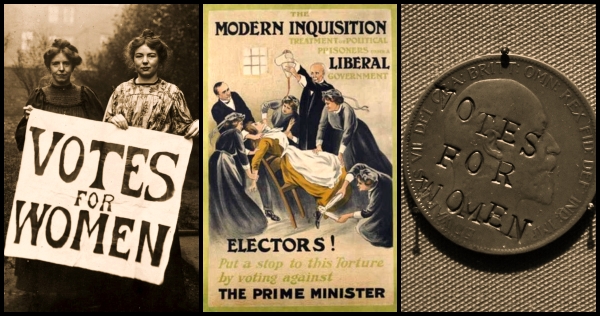
Consider how the impulse behind male resistance to women’s suffrage may have also manifested itself in male scholarly bias about Ophelia and Gertrude. If one feels women are too emotional, not rational enough to deserve to vote, how might that color one’s reading of Ophelia’s madness and drowning, and of Gertrude’s decision to drink from what Claudius knows is a poison cup, intended for Hamlet?  Women were not admitted to study at Oxford until 1920, and did not get the vote in England until 1918. (In other words, women have only had the vote in the UK for 100 years, out of four centuries of Shakespeare; and the vote is only one of many possible indicators of male bias.) It is easy to imagine average male literary critics writing off Ophelia’s many lines in Act 4, scene 5, as simply mad ravings, rather than finding any method in her madness; easy to imagine them missing how she acts like a court fool [1], or like Hamlet’s promised, handfast wife and queen regent in his absence [2]...

Part 3: Ophelia, Gertrude, and mutually exclusive agency

Image
I love Grace Tiffany’s sonnet “Gertrude and Ophelia” [1] for now it reimagines Gertrude as having drowned Ophelia. The sonnet explores a possibility for Gertrude’s agency that the play chooses not to explore. Grace recently introduced the poem, tongue-in-cheek, as depicting “what really happened.” Other plays, films and novels make similar claims, exploring alternative versions from different points of view, including the 2018 film, Ophelia ; a 2022 novel by Carly Stevens called Laertes: A Hamlet Retelling; a 2008 novel by Paul Griffiths made from Ophelia’s words, Let Me Tell You ; and many more. [2] On female agency, there is a reading of Ophelia’s death that wrestles with Ophelia’s apparent lack of agency, proposing not despair, but that Ophelia uses suicide to fiercely reclaim her own agency. [3]  IRRECONCILABLE DIFFERENCES This reading is hard to reconcile with Grace Tiffany’s poem: Ophelia probably cannot be both a victim of murder at Gertrude’s hands, and *also* a suicide. ...