Posts

Showing posts with the label martyrs

Second Day of Christmas in Shakespeare's time - Feast of Stephen, Martyr (Series, Part 2)

Image
The second day of Christmas, the 26th of December, in Shakespeare’s time as now, was the Feast of St. Stephen [1], the first Christian martyr, reminding Christendom that this infant allegedly born in Bethlehem was born to die for the salvation of all humankind, and that others would be persecuted and killed in his name. Bible readings for the feast include Acts 7 (first lesson), telling the tale of Stephen’s martyrdom, and Matthew 23, a prophesy and history of the killing of prophets. Of course there were other tales of martyrdom or self-sacrifice available to people in Shakespeare’s time, not found in the Bible [2], including the Greek tale of Alcestis, willing to die in place of her husband. English law did not require people to read or hear Greek, non-biblical tales. It did, however, require church attendance, so the tale of the martyrdom of Stephen was required, a non-optional element of the broad fabric of religious and literary stories and literature that would have informed Sh...
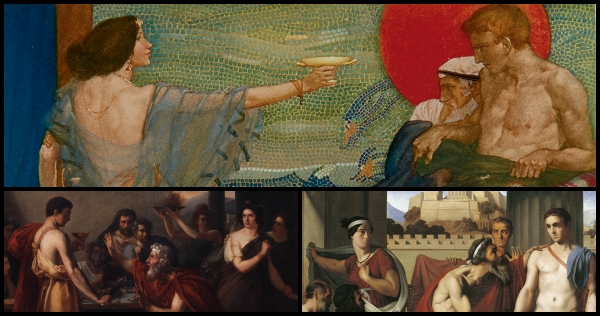
Poison cups and Martyrs: Gertrude, Medea, and Matt 20:20-24

Image
Shakespeare was a thief of plot elements and tropes, like other playwrights of his time. Given that the original tale on which Hamlet is based doesn’t include a poison cup from a step-parent, secretly intended for the prince, but taken instead by the queen, where might that have come from? What uses of such a trope might have inspired Shakespeare? [1] Shakespeare was familiar with Ovid’s Metamorphosis from Latin school and from Arthur Golding’s 1567 translation. This included tales of Medea in Book VII. These include a story about a poison cup that Medea intends for her stepson Theseus, but which is knocked from his hand at the last moment by his father, king Aegeus, who recognizes his son. This may have informed Shakespeare’s use of the poison cup theme in Hamlet. But Shakespeare switches the roles of the step-mother-poisoner and the father-savior so that it’s the stepfather Claudius who intends to poison his stepson, and the mother, Gertrude, who buys her son time by drinking...

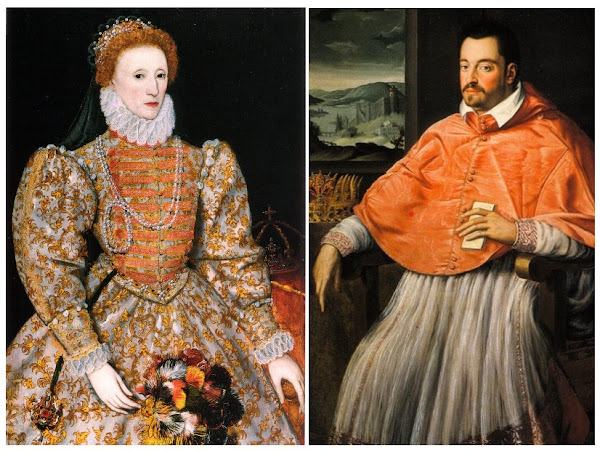
Elizabeth I, Popes, & Ferdinando I de' Medici in Love's Labor's Lost

Image
Love’s Labor’s Lost was Christmas entertainment (1593) for Elizabeth I and her court. It's about a bunch of guys who try to be celibate, and who keep a princess and her attending ladies locked out of their castle. The men fall in love with the women, but the women get the last word. Sort of like popes (some who failed at the celibacy thing) who excommunicated Elizabeth, keeping her out of the “castle” of the Roman Church, but never getting what they desired of her. Many scholars note that the character of King Ferdinand is based on King Henry III of Navarre, who had been raised Protestant, and who Elizabeth I had supported in French wars of religion. He converted to Catholicism (“Paris is worth a mass”) to consolidate his power as the next king of France, disappointing Elizabeth. Of the nine popes during Elizabeth’s reign,* one of them, Gregory XIII (1572-85), had a child out of wedlock (like Armado and Jaquenetta in the play) before his ordination. In their oaths and the...