Posts

Showing posts with the label Transformation

Part 51: Ophelia & Transformations of Suicide in Hamlet

Image
Shakespeare’s Hamlet can be read as offering not mere variations, but transformations of suicide [1]: After Hamlet wishes that God had not made laws against suicide, he later feels called by heaven and hell to avenge his father’s death [2], a kind of suicide mission. If he kills Claudius as God’s vengeful scourge [3], Hamlet may be hell-bound. He later realizes: it may be more damnable not to kill him, and for Claudius to cause Denmark further harm [4]; Hamlet may not survive, but his death might be transformed by a higher purpose. Ophelia’s is the first alleged suicide, in 4.7, transformed by her own madness in 4.5 [5] and by Gertrude’s account in three ways: 1. She says it was caused by the breaking of an “envious sliver” of willow [6], envious that it had no crowns like other willow branches (envious, like Claudius of his brother’s crown and wife). 2. Gertrude implies that, in the water, Ophelia seemed to surrender to the unfolding will of God [7]. 3. Her account may be...

Hamlet & Horatio's Friendship: Mutual, Reciprocal, Transformative, Free: (Part 15) Labors of Gratitude and Regret in Hamlet

Image
This is the latest installment in a multi-part series examining how characters interact in Hamlet, offering opportunities, gifts, planting seeds for future inspiration, or for changes of heart & mind. It follows ideas from Lewis Hyde (“The Labor of Gratitude,” a chapter in his book, The Gift: Imagination and the Erotic Life of Property) . For more notes on the series and an index of previous posts in this series, see the end of this post. ~~~~~~~~~~~~~~~~~~~~~~~~~~~~~~~~~~~~~~~~~~~~~~~ [Detail from 1839 painting by Ferdinand Victor Eugène Delacroix (Public Domain)] Horatio and Hamlet enjoy a special friendship , though perhaps any friendship with a prince might at times seem one-sided. Horatio seems to have left Wittenberg of his own free will to honor the death of his king, his friend’s father. He was not commanded to come. When Hamlet asks in 1.2 what brings him to Denmark, Horatio jokingly says “A truant disposition,” an answer Hamlet will not accept because he knows Hora...

Fearsome, Flattered, Glimpsing Transformation, 4.5: (Part 6) Laertes and Labors of Gratitude and Regret in Hamlet

Image
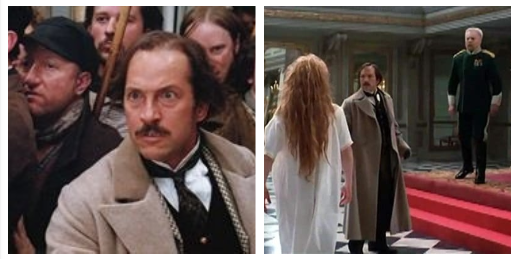
This is the latest installment in a multi-part series examining how characters interact in Hamlet, offering opportunities, gifts, planting seeds for future inspiration, or for changes of heart & mind. It follows ideas from Lewis Hyde (“The Labor of Gratitude,” a chapter in his book, The Gift: Imagination and the Erotic Life of Property ). See notes at the end for more details about the series, and for an index of other posts in the series. [Images from Act 4, scene 5 of Kenneth Branagh's 1996 Hamlet :  L: Laertes (played by Michael Maloney)& mob; R: Ophelia (played by Kate Winslet), Laertes, & Claudius (played by Derek Jacobi).] (Continued from the previous week's post) [Nathaniel Parker as Laertes in Franco Zeffirelli's 1990 Hamlet ] A Laertes to be Feared? The next time we see Laertes (4.5), his father is dead and his sister has gone mad. The Laertes who had an example of kings to fear and dread (and who referred to Claudius in 1.2 as his “dread Lo...