Posts

Showing posts with the label Intertextuality

Bullough, Jenkins, Asimov on Claudius as changed name of Hamlet's uncle Feng (Part 13, Claudius series)

Image
Geoffrey Bullough (1957-1972), Isaac Asimov (1970), and Harold Jenkins (1982) all noted Shakespeare having changed the name of Hamlet's uncle “Feng” to “Claudius”: Asimov: "The reigning King of Denmark, who has succeeded the elder Hamlet[...] is Claudius. Shakespeare has chosen an aristocratic Roman name for the purpose. (It was the name of a patrician family in the time of the Republic and one from which several of the early emperors were descended—including Claudius, the fourth Emperor, under whom Britain was conquered in the years following Cymbeline's death.[1]) In Saxo Grammaticus' original tale, the new King was named Feng, and perhaps Shakespeare did well to change that." (87)  [2] Jenkins: "The King's name is knows from his first entry-direction and first speech-heading, after which, however, it is never used again."  [3] Jenkins continues: "It was evidently suggested by that of the Roman emperor who married Agrippina, his niece and th...
Part 1: Hamlet's uncle "Claudius" as lame, satyr, & polysemous

Image
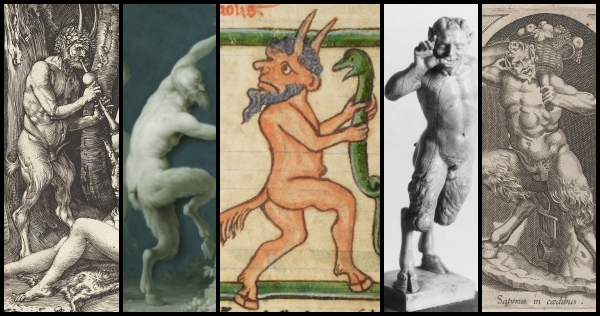
Last week I hinted at reasons why Shakespeare may have named Hamlet’s uncle Claudius. Consider a prerequisite: Too many people limit thinking to binaries, either-or, yes-no, treating words like “Claudius” as ciphers with a single meaning, an allusion to one historical or literary figure. The trick is not to decode a single meaning, but to embrace multiple possibilities, like stepping into a multiverse [1], or what Julia Kristeva and others call “intertextuality” [2]. The name “Claudius” can mean more than one thing (can be polysemous), each meaning relevant in its own way. Next, note that “Claudius” can mean “lame” [3]. Maybe King Hamlet’s brother was disabled and was thought less fit for rule than his brother, like Richard III (of hunched-back fame, blamed in another Shakespeare play for killing the young princes in the tower, getting rightful heirs out of his way). First, “Claudius” can mean “lame” [3] Maybe King Hamlet’s brother was disabled and was thought less fit for rule than hi...

(Part 11) Cordelia is about her father's business in Shakespeare's King Lear

Image
~~~~~~~~~~~~~~~~~~~~~~ INDEX OF POSTS IN THIS SERIES: https://pauladrianfried.blogspot.com/2023/01/index-hamlet-in-32-as-boy-jesus-lost.html ~~~~~~~~~~~~~~~~~~~~~~~~~~~~~~~~~~~~~~~~~~~~~~~~ This series has considered Hamlet’s allusion to Luke 2:46-52, the tale of the boy Jesus amazing temple elders and his parents.[1] Last week we considered a similar thematic echo in Macbeth , when the son of Lady Macduff amazes and humors his mother with wit and grace while also catching her conscience, like a court fool. But Hamlet and Macbeth are not the only Shakespeare plays that echo or allude to the Luke 2 story: King Lear contains an allusion to this gospel story, spoken by Lear’s exiled daughter, Cordelia.[2] We might recall how in Luke 2, Jesus tells his parents that he went to the temple because he had to be about his (heavenly) “father’s business.” Hamlet also believes he must be about his father’s business, but he is confused, at first striving reluctantly to be about the ghost’...

Hamlet's Emmaus in Jonah's Belly: Allusions inside of allusions

Image
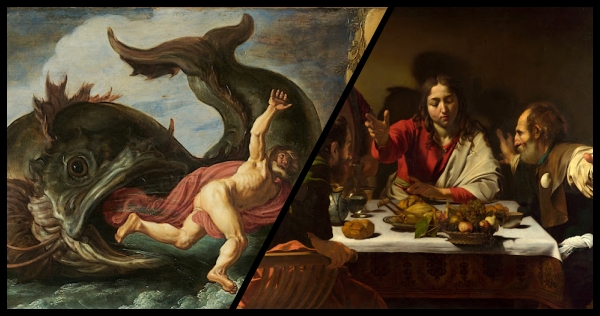
HOW IS IT POSSIBLE that one allusion or plot echo might be encompassed inside of another? A playwright can begin one thread of a story with an allusion, have the action cut away to a sub-plot with a different allusion, and pick up later on the original story thread. This happens in Hamlet, with plot echoes of Jonah and Emmaus. JONAH [1]: Hamlet’s sea-voyage contains important similarities to the sea-voyage of Jonah.[2] Bits of this allusion or the plot echo begin early in the play, with Hamlet exclaiming to the ghost, “O my prophetic soul!” [3] Later there are repeated references to his upcoming sea-voyage to England. [4] On his sea-voyage, we don’t hear of his having been in the belly of the pirate ship until Horatio reads a letter in which Hamlet mentions pirates [5]. To Claudius, Hamlet writes how he was “set naked on your kingdom.” [6] EMMAUS: Before we hear details that complete the Jonah echo in 5.2, Hamlet and Horatio are two Danes on the road to Elisinore, stopping in a graveya...

(Part 6) Hamlet in 3.2 as boy Jesus: Plucking mysteries' hearts?

Image
~~~~~~~~~~~~~~~~~~~~~~ INDEX OF POSTS IN THIS SERIES: https://pauladrianfried.blogspot.com/2023/01/index-hamlet-in-32-as-boy-jesus-lost.html ~~~~~~~~~~~~~~~~~~~~~~~~~~~~~~~~~~~~~~~~~~~~~~~~ When Hamlet implies after The Mousetrap that he and his parents are like (or ironically unlike) the boy Jesus and the Holy Family, [1] we have an analogy: Hamlet, his mom Gertrude and uncle/stepdad Claudius on one side, Jesus, his mother Mary and stepdad Joseph on the other.  Some analogies may seem simple and straightforward: The moon is like a pearl in the night. But what if both elements of the analogy are mysterious, ambiguous, moving targets? That is the case with Hamlet and Jesus. HAMLET IS NOT YOUR AVERAGE REVENGER: He wants to be sure his uncle is guilty, to avoid killing the wrong man.[2] Soon after Hamlet thinks he can be sure, he kills the wrong man - Polonius, by accident.[3] This is not your average revenger. Peter Lake says that Hamlet the play is a hybrid of four genres: Rev...

Sixteen Ways of Looking at Hamlet & Odysseus - part 7

Image
The list of similar incidents and themes in Hamlet and literature mentioning the Trojan War* is long. We might one day discern what similarities are coincidental [1], as compared to evidence that Shakespeare knew and was influenced by his first- or second-hand knowledge of Trojan War-related texts [1].   For now, here is a new list: 1. Odysseus swears an oath to Tyndareus to defend whoever wins Helen; Hamlet swears an oath to avenge Claudius having taken Gertrude from his father. 2. Paris takes Helen from Menelaus. Claudius takes Gertrude from King Hamlet. 3. Odysseus feigns madness , delays keeping his oath to Tyndareus; Hamlet feigns madness, delays keeping his oath to the ghost. 4. Hyperion/Helios is unsympathetic to Odysseus’ hungry men who steal his cattle. The ghost’s skin was made “ Lazar -like,” (ref. to a rich man who was unsympathetic to the beggar Lazarus in Luke 16). 5. Ithika's court & society are corrupted in Odysseus’ absence. Denmark is corrupted...

Jewell's Homily V & Lazarus-Hamlet-Claudius Correlations (part 12 in Lazarus series)

Image
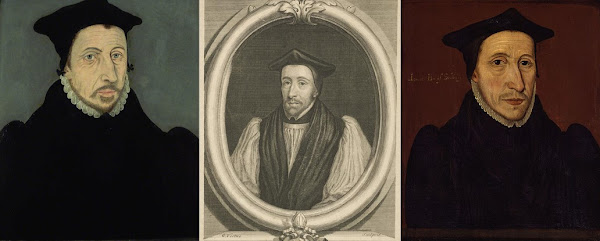
Two Early Modern texts - each in their own ways well-known in their time - both touch upon all the following themes: adultery, lust, drunkenness, selfish ambition, sedition, envy, murder, incest, madness, and poison. They also allude to the following historical or Biblical-mythical characters: Alexander the Great, Herod John the Baptist The Beggar Lazarus and the selfish rich man The Serpent in the Garden Adam Cain King David St. Bernard of Clairvaux What are those two Early Modern texts? If you guessed (1) Homily V. from Book II of the official English Church homilies, "Against Gluttony and Drunkenness" (usually attributed to John Jewell), and (2) Shakespeare’s Hamlet , you are correct. The general idea in the homily is that any excess pursuit of pleasure in sex, food, or drink, is sinful, while all the things Christians receive as gifts from God in a spirit of thanksgiving and moderation are good. (Jewell might therefore disagree with Mae West, oft...