Posts

Showing posts with the label Series

In Hamlet 1.1, Francisco demands Bernardo's repentance (series)

Image
Because Francisco has the watch and is not yet relieved by Bernardo, many observe that Bernardo is speaking out of turn when he says the opening line of the play, "Who's there?" Francisco rightly refuses to answer, and demands that Bernardo "unfold himself" -- identify himself to Francisco instead. Is it acceptable for one soldier or sentinel to demand reform of another? Bernardo violated the rules of the watch: In a time of war or potential war, following such rules carefully can mean life or death. Hamlet is a play in which many rules (such as the Ten Commandments) are broken, and lives are lost. Bernardo doesn't really answer Francisco's question: Francisco guesses Bernardo's identity, and Bernardo confirms it. Rather than be a stickler for military protocol (rules for their own sake), Francisco backs off. Bernardo's approach didn't represent a sneak attack from an enemy, but merely a mistake by another nervous sentinel. Relieved of his ...

GENERAL INFORMATION: Ten Commandments in Hamlet (Series)

Image
GENERAL INFORMATION: Ten Commandments in Hamlet (Series) [1] Much attention has been given to iconoclasm (destruction of sacred or allegedly idolatrous images) in England during the reformation, but less to how such images and artifacts were effectively replaced by royal injunctions of Elizabeth I in 1561 requiring the Ten Commandments (Decalogue) to be posted on the eastern wall of every church [2]. Statues, carvings, wall paintings, and stained glass had once shown angels, demons, scenes from biblical stories and the lives of saints, appealing to collective memory and to the imagination. In iconoclastic acts of erasure, these were replaced by the Decalogue, appealing more to the logical mind, the superego, the rule of law, and fear of punishment.  Shakespeare’s play, Hamlet , not only demonstrates the violation of all of these, but also may refer to the sometimes resented replacement of icons with commandment boards.  Commandments were posted for all the faithful to see, ...

SERIES INDEX: TEN COMMANDMENTS in Hamlet

Image
Shakespeare’s Hamlet demonstrates the violation of all of the Ten Commandments, and may also refer to the sometimes resented iconoclastic replacement of images (statues, paintings, sometimes stained glass) with commandment boards.  I will add to this SERIES INDEX as I post new installments. SERIES INDEX https://pauladrianfried.blogspot.com/2026/07/series-index-ten-commandments-in-hamlet.html GENERAL INTRODUCTION : https://pauladrianfried.blogspot.com/2026/07/general-information-ten-commandments-in.html In Hamlet 1.1, Francisco demands Bernardo's repentance (Series, prelude 1) - August 04, 2026: https://pauladrianfried.blogspot.com/2026/08/in-hamlet-11-francisco-demands.html HAMLET THE DEMONIC ICONOCLAST (prelude 2) https://pauladrianfried.blogspot.com/2026/08/hamlet-demonic-iconoclast-ten.html Dives and Pauper, Hamlet, Ten Commandments, and Falstaff   (prelude 3) - Early 15th Century book structured in part around the Ten Commandments, with a dialogu...

2024 Hamlet's Bible blog by the numbers - a retrospective

Image
2024 was a very good year for the Hamlet’s Bible blog… VIEWS FOR THE YEAR came to about 17k, averaging about 326 views per week over the year. This was slightly more than a 90% increase over the average for the past six years, which was about 9k per year and 172 per week, out of a six-year total of 53.6 k views (and possibly higher [1]) from more than 80 countries since January 1, 2019. So overall, views have been steadily increasing. 17 SERIES SO FAR: Since I started posting (first on LinkedIn in 2017), I have done 17 series [2], for an average slightly more than two series per year. OPHELIA In 2024, I finished my series on Ophelia (my longest) [3]. CLAUDIUS This past year I started a new series on Claudius (to be continued at greater length in 2024) [4]. TWELVE DAYS OF CHRISTMAS I did a brief series on the twelve days of Christmas (concluding soon) [5]. POSTS WITH HIGHEST VIEWS Views of posts from the Ophelia series dominated the year, as might be expected for a long series, but o...

MASTER SERIES INDEX to quickly find the index for each series on the blog

Image
MASTER INDEX to quickly find the index for each series on the blog (reverse-chronology): I have long wanted to compile a master index to make it easier for readers to find the various series I have written over the years. Here it is! Thank you for your interest. 18 - Twelfth Night (Series Index) https://pauladrianfried.blogspot.com/2026/04/twelfth-night-series-index.html 17 - The Twelve Days of Christmas in Churches of Shakespeare’s Time (Dec. 25, 2024-Jan. 2025) INDEX https://pauladrianfried.blogspot.com/2024/12/twelve-days-of-christmas-in-churches-of.html 16 - Claudius (Nov 19, 2024-) INDEX https://pauladrianfried.blogspot.com/2024/11/index-why-claudius-not-feng-whats-in.html 15 - Ophelia (and Gertrude) (June 2023-Aug. 2024). INDEX: https://pauladrianfried.blogspot.com/2023/10/index-of-ophelia-posts-2023-series-and.html 14 - Hamlet as Boy Jesus in Temple (Jan. 31-May 2, 2023). INDEX: https://pauladrianfried.blogspot.com/2023/01/index-hamlet-in-32-as-boy-jesus-lost....

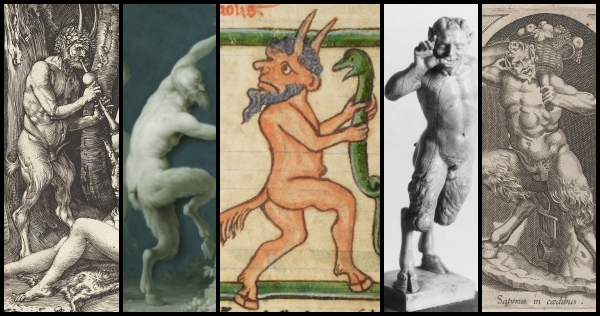
Part 1: Hamlet's uncle "Claudius" as lame, satyr, & polysemous

Image
Last week I hinted at reasons why Shakespeare may have named Hamlet’s uncle Claudius. Consider a prerequisite: Too many people limit thinking to binaries, either-or, yes-no, treating words like “Claudius” as ciphers with a single meaning, an allusion to one historical or literary figure. The trick is not to decode a single meaning, but to embrace multiple possibilities, like stepping into a multiverse [1], or what Julia Kristeva and others call “intertextuality” [2]. The name “Claudius” can mean more than one thing (can be polysemous), each meaning relevant in its own way. Next, note that “Claudius” can mean “lame” [3]. Maybe King Hamlet’s brother was disabled and was thought less fit for rule than his brother, like Richard III (of hunched-back fame, blamed in another Shakespeare play for killing the young princes in the tower, getting rightful heirs out of his way). First, “Claudius” can mean “lame” [3] Maybe King Hamlet’s brother was disabled and was thought less fit for rule than hi...

INDEX: Character Arcs: Labors of Gratitude & Regret in Hamlet (Aug. - Dec. 2019)

Image
INDEX: Character Arcs: Labors of Gratitude & Regret in Hamlet (Aug. - Dec. 2019) In the second half of 2019, I did a series in which I considered character arcs in Hamlet, using ideas adapted from a Lewis Hyde chapter on “The Labor of Gratitude,” expanding this to include also labors of regret. Posts in this series: Part 1: Gifts & Labors of Gratitude in Hansel & Gretel - (before Hamlet) - 8/12/19 https://pauladrianfried.blogspot.com/2019/08/lewis-hyde-on-labor-of-gratitude.html Part 2: Hamlet's Descent & Arc Toward Mercy (Labors of Gratitude and Regret) - 8/19/19 https://pauladrianfried.blogspot.com/2019/08/labors-of-gratitude-and-regret-in-hamlet.html Part 3: Polonius' Labor of Regret - 8/26/19 https://pauladrianfried.blogspot.com/2019/08/polonius-his-labor-of-regret.html Part 4: Into Dad's Circle of Fear & Flattery: Laertes' Labors of Gratitude & Regret, 1.2 - 9/3/19 https://pauladrianfried.blogspot.com/2019/09/laertes-dyna...

THANK YOU for following my series on Ophelia!

Image
THANK YOU for following my series on Ophelia! This is the 15th (and longest!) series I have done on my blog; For a list of the other 14 series, see footnote [1]. In the fourth part of her poem, “Sometimes,” Mary Oliver offers this (often-quoted) stanza: Instructions for living a life: Pay attention. Be astonished. Tell about it. I don’t start or end my series thinking that I’m an expert, but rather, a seeker with a hunger to fill gaps in my understanding. It’s good to chip away at a topic a little at a time, like the saying: a long journey is made up of many small steps. I try to pay attention, and am frequently astonished. I’m grateful that a few others follow along as I share questions and reflections. There are always new questions, new perspectives, new angles for considering even very old ideas. Ophelia is a mystery to me. For some reason (explored in some posts of this series), Gertrude presents Ophelia’s drowning as something other than suicide. Some are struck with disbelief to...