Posts

Showing posts with the label love madness

Part 41: Love Madness: Ophelia, Gertrude, and Helen of Troy
Image
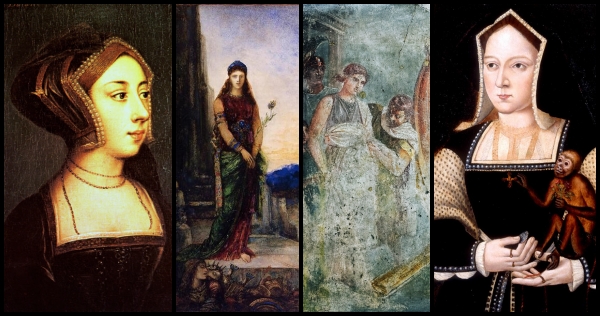
QUEEN: [...] for your part, Ophelia, I do wish That your good beauties be the happy cause Of Hamlet’s wildness. So shall I hope your virtues Will bring him to his wonted way again, To both your honors. OPHELIA  Madam, I wish it may.  (3.1.42-47)   Queen Gertrude expresses hope that Ophelia’s father Polonius may be correct in thinking that Hamlet is mad for the loss of Ophelia’s love. Shakespeare often described love as a madness in need of a cure.[1] This may be more significant than one might assume at first glance, for at least three reasons.   First, Gertrude’s comments apply not only to her son but also to her new husband, even if she doesn’t know it. For Claudius to kill his brother and take the throne and his brother’s wife seems a kind of madness. Gertrude’s “virtues” were not enough to cure him. Secondly, “The face that launched a thousand ships” is the famous Christopher Marlowe line describing the beauty of Helen of Troy. To steal her, Paris risked war, w...

Part 13: Ophelia, Hamlet, and 13 ways of looking at madness

Image
Often we speak of Ophelia as having really gone mad, while Hamlet only pretends . But in fact the play uses the word “mad” in many ways, as do critics. So, with a nod to Wallace Stevens’ poem title [1], a list: MADNESS AS DEMONIC POSSESSION: Horatio worries that the ghost is demonic and “might deprive [Hamlet] sovereignty of reason / And draw [him] into madness” (1.4.77-82). MADNESS AS FEIGNED: After meeting with the ghost (1.5), Hamlet says he will “put on” “an antic disposition” (1.5.189-192), as did Odysseus, King David, and Amleth in the Saxo Grammaticus source; but Hamlet’s encounter with the ghost may actually be driving him insane… [Edit 9/24/2023: In 3.1.7-10, Guildenstern also comments on Hamlet's feigned madness: "Nor do we find him forward to be sounded, But with a crafty madness keeps aloof When we would bring him on to some confession Of his true state." ] MADNESS AS WHAT LOST LOVE CAN DO: Polonius believes Hamlet has been made insane by the los...