Posts

Showing posts with the label politics

NO ONE TELLS OPHELIA that Hamlet killed her father (Ophelia Postlude)

Image
Ophelia and Laertes know their father’s burial was abbreviated and secretive [1]. Claudius says, For good Polonius’ death, and we have done but greenly In hugger-mugger to inter him… [2] Claudius confides in Laertes that Hamlet killed his father [3]: This suits his purposes, to enlist the help of Laertes to kill Hamlet without Claudius revealing that he killed his brother, the king. But Claudius does not reveal to Ophelia how her father died. While he confides in Laertes, Ophelia is drowning [4]. There is no scene in Hamlet in which a character tells Ophelia that Hamlet killed her father. None. No character refers to Ophelia having been told, or knowing it, or finding out via gossip from Elsinore guards or servants. This may *not* be a small point: It is one thing to assume that Ophelia should be defined mostly by her familial and romantic relationships, and to have gone mad merely because of them. Yet it is very different for her to be defined by political awakenings, to have - lov...

A Note on Gender, Religion, and Politics in Twelfth Night

Image
One last Twelfth Night post before the anniversary of its first 1602 public performance on February 2: In Shakespeare’s time, a young male actor would have played the female Viola, later disguised as male Cesario: Much analysis of the play deals with gender, disguises, social constructs. Some of it considers Elizabeth I, Shakespeare’s monarch, in a role usually reserved for men. The fifth pageant for her coronation portrayed Deborah, a prophetess of Hebrew scriptures who led Israel as judge [1], contrary to Christian assumptions that kept women from female authority roles. Some scholars and historians note that Elizabeth had a reputation for swearing, not so much sexual profanity as religious, like Hamlet’s “swounds” (by Christ’s wounds) or “sblood” (by God’s blood). Elizabeth’s favorite was “by God’s death,” which listeners assumed was for shock value, by a woman in a man’s world, striving to maintain attention and control [2] Like Portia disguised as Balthazar in the courtroom sce...

Part 40: Ophelia, Gertrude, and the Purgatory of Scholarship

Image
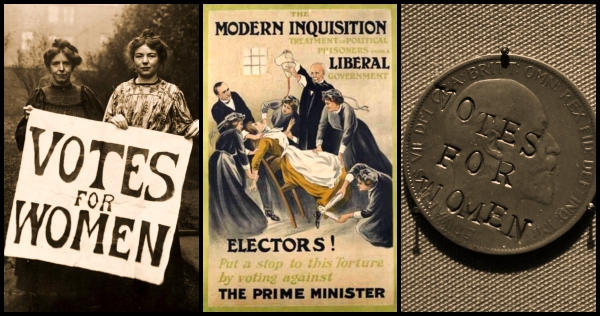
Consider how the impulse behind male resistance to women’s suffrage may have also manifested itself in male scholarly bias about Ophelia and Gertrude. If one feels women are too emotional, not rational enough to deserve to vote, how might that color one’s reading of Ophelia’s madness and drowning, and of Gertrude’s decision to drink from what Claudius knows is a poison cup, intended for Hamlet?  Women were not admitted to study at Oxford until 1920, and did not get the vote in England until 1918. (In other words, women have only had the vote in the UK for 100 years, out of four centuries of Shakespeare; and the vote is only one of many possible indicators of male bias.) It is easy to imagine average male literary critics writing off Ophelia’s many lines in Act 4, scene 5, as simply mad ravings, rather than finding any method in her madness; easy to imagine them missing how she acts like a court fool [1], or like Hamlet’s promised, handfast wife and queen regent in his absence [2]...

Hamlet's Jewish & Christian Reformers

Image
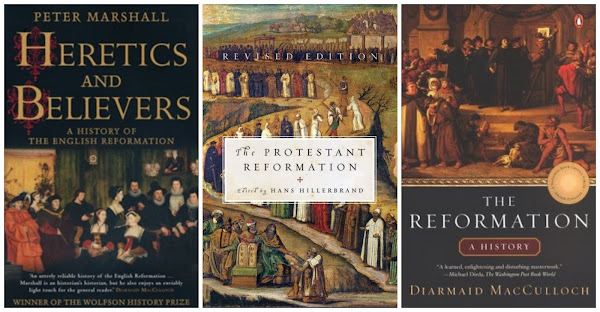
In Shakespeare’s lifetime (as in ours for some), there was an anti-Semitic tendency among Christians to view Judaism as an inferior faith and to view Jesus, Son-figure of a Trinitarian God, as Judaism’s promised messiah sent to redeem humanity from their sins, establishing a "one true faith." An alternative view: Jesus was a Jew, and a reformer, who lived and preached at a time when Judaism had been corrupted in large part by the Roman occupation. Reformers like Jan Hus, Luther and Calvin may have thought it too proud to consider their own reformer-roles analogous to that of Jesus (Luther once referred to tales of medieval monks, including one about a monk who destroyed a chair he had made because he believed he had become too proud of it). But in fact we might consider that they attempted to do for Christianity something analogous to what Jesus attempted to do for Judaism. Hamlet contains references to many reformers: - St. Gis (Jesus). - Wittenberg, where Luthe...

Elizabethan-Jacobean Politics in Hamlet, via Hankins (1941)

Image
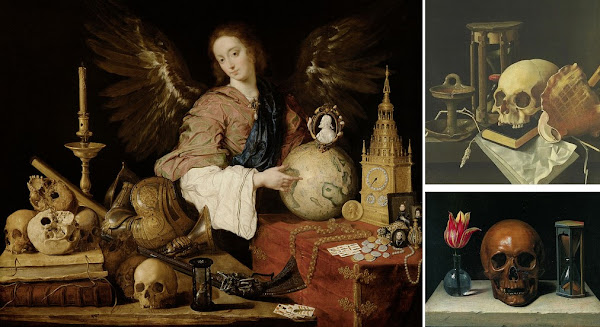
“. . . the purpose of playing . . . is . . . to hold . . . the mirror up to nature; to show . . . the very age and body of the time his form and pressure.” (Hamlet, 3.2)1 Many people assume that Shakespeare is unconcerned with the topical, political, ephemeral details of his time, because they don't spot all the parallels that original audiences did. But in fact plays like Hamlet are full of them. “Playing” doesn’t merely reveal so-called universal truths: John Erskine Hankins thinks Hamlet addresses historical-political events of Shakespeare's “very age” and “time”: “Though the scene of Hamlet is medieval Denmark, most critics will agree that its characters and problems are those of sixteenth-century England. As is his usual custom, Shakespeare writes of his own day, regardless of where and when the action of his drama takes place. This is truer of Hamlet than has been generally supposed.”2 [Left: Allegory of Vanity (1632-1636), by Antonio de Pereda (1611...

Politics in Hamlet - via John Erskine Hankins, 1941

Image
“. . . the purpose of playing . . . is . . . to hold . . . the mirror up to nature; to show . . . the very age and body of the time his form and pressure.” (Hamlet, 3.2)1 Many people assume that Shakespeare is unconcerned with the topical, political, ephemeral details of his time, because they don't spot all the parallels that original audiences did. But in fact plays like Hamlet are full of them. “Playing” doesn’t merely reveal so-called universal truths: John Erskine Hankins thinks Hamlet addresses historical-political events of Shakespeare's “very age” and “time”: “Though the scene of Hamlet is medieval Denmark, most critics will agree that its characters and problems are those of sixteenth-century England. As is his usual custom, Shakespeare writes of his own day, regardless of where and when the action of his drama takes place. This is truer of Hamlet than has been generally supposed.”2 [Left: Allegory of Vanity (1632-1636), by Antonio de Pereda (1611...

Hamlet & Aristotle's Poetics, Ethics, & Politics

Image
A feature of the period called the English Renaissance is its attention to Greek and Latin classical texts, which includes not only poetry and drama, but also philosophy - including Aristotle. Many students of Shakespeare are told to consider his tragedies in terms of Aristotle's poetics, which says that the main character has some tragic flaw which eventually brings out his downfall. But a number of elements in Hamlet invite us to scrutinize this limited approach. [L: Roman copy Greek bronze bust of Aristotle by Lysippos, c. 330 BC. R: Detail from the Chandos portrait of Shakespeare , 1610.] By this, many claim Hamlet's flaw is that his conscience makes him overthink and hesitate; but in fact as some scholars have recognized, many of his worst moments (his unkindness to Ophelia, his stabbing of Polonius) come from not thinking enough, not pausing before acting. If Hamlet simply kills Claudius at prayer, not only does he risk sending Claudius to heaven and failing at re...