Posts

Thanks to readers, 19-27 October, 2021

Image
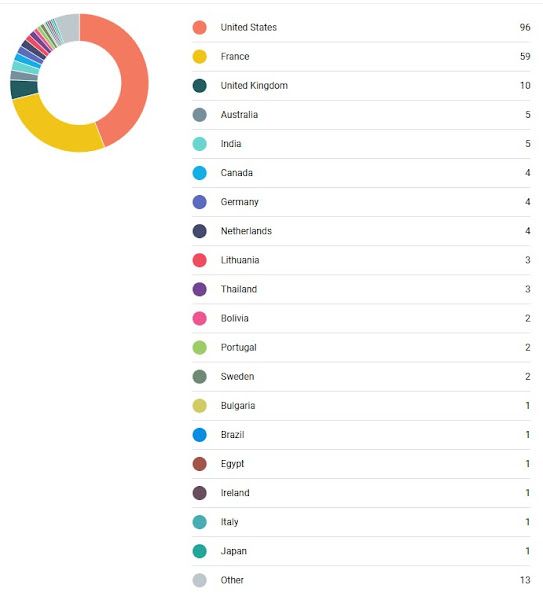
Thank you to readers of this blog for this past week, which the blog's analytics say came to 237 views from the following 19+ countries: Thank you for your interest. I am grateful and humbled. ~~~~~~~~~~~~~~~~~~~~~~~~~~~~~~~~~~~~~~ My current project is a book tentatively titled Hamlet’s Bible , about biblical allusions and plot echoes in Hamlet. Below is a link to a list of some of my top posts (“greatest hits”), including a description of my book project (last item on the list): https://pauladrianfried.blogspot.com/2019/12/top-20-hamlet-bible-posts.html I post every week, so please visit as often as you like and consider subscribing.

Good & Grace from Evil & Sin in Love's Labor's Lost & Henry V

Image
How can good be distilled from evil? How can sin turn to grace?  GOOD FROM EVIL IN HENRY V (1599):  In Shakespeare's Henry V , Act 4, Scene 1 (Folger), King Henry says something that some readers and audience members may find strange: "There is some soul of goodness in things evil, Would men observingly distil it out. We should note that this is not at all the same as arguing that evil means can and should be used to achieve good ends: As they say, the ends do not justify the means; but this statement by Henry is very different. Given that Henry was a kind of prodigal son, it seems Henry himself is living evidence that good can be distilled from evil: Perhaps the time he spent with Falstaff not only corrupted him for a time, but also helped him understand aspects of himself, and a wider range of his subjects, better, and therefore made him a better king. Henry's time as a prodigal son was not chosen as an evil means to achieve a good end: He chose to be prodigal...

Thanks to readers for the week of 12-19 October, 2021

Image
Thank you to readers of this blog for this past week, which the blog's analytics say came to 288 views from the following 19+ countries: Thank you for your interest. I am grateful and humbled. ~~~~~~~~~~~~~~~~~~~~~~~~~~~~~~~~~~~~~~ My current project is a book tentatively titled Hamlet’s Bible , about biblical allusions and plot echoes in Hamlet. Below is a link to a list of some of my top posts (“greatest hits”), including a description of my book project (last item on the list): https://pauladrianfried.blogspot.com/2019/12/top-20-hamlet-bible-posts.html I post every week, so please visit as often as you like and consider subscribing.

Of Cassidy Cash, Dan Burkarth, Instant Shakespeare, and The Red Dragon

Image
Actor and teacher Dan Burkarth was in an Instant Shakespeare production of Antony and Cleopatra recorded from a Zoom performance and available on YouTube. Instant Shakespeare does annual readings of all Shakespeare's plays and has a LinkedIn page here , and a website here . After some initial chatter and clearing of throats, the performance begins about two minutes in, at this YouTube link .  In the 400+ years since Shakespeare's death, performances of all of Shakespeare's plays usually took place long before the advent of motion pictures, TV, and internet. But one could imagine some families holding dramatic readings of Shakespeare's plays, with certain family members doubling or tripling their roles they played to cover all the parts. (It is said that Jane Austen participated in "family theatricals" at home, and it would not be too much of a stretch of the imagination to think that at times these may have included some Shakespeare plays or s...

Begging & Poor (& Chastity & Pregnancy) in Love's Labour's Lost (1594-1597)

Image
Love's Labour's Lost has an earliest recorded performance before Queen Elizabeth as part of the court's Christmas festivities in December, 1597. [Title page from the 1598 first quarto, cropped, via Wikipedia . Public domain.] Elizabeth had been promoted as "Virgin Queen," but was rumored to have had affairs, and many in England were anxious about the fact that she had not married and produced an heir; so it is interesting and significant that the play has a theme of how difficult and impractical chastity can be. It's as if Shakespeare said: Court Christmas play? Virgin queen? Rumored affairs? No heir? How about a comedie about failing at chastity, pregnancy before marriage, falling in love, and reforming bad habits? (Let’s face it: Life is not all about work, even for a monarch! It’s about love. Right?) The play preempts heckling from the court by including a masque, which members of the court heckle; it preempts criticism of its playwright for having ...

Thanks to readers for the week of 5-12 October, 2021

Image
Thank you to readers of this blog for this past week, which the blog's analytics say came to 193 views from the following 19+ countries: Thank you for your interest. I am grateful and humbled. ~~~~~~~~~~~~~~~~~~~~~~~~~~~~~~~~~~~~~~ My current project is a book tentatively titled Hamlet’s Bible , about biblical allusions and plot echoes in Hamlet. Below is a link to a list of some of my top posts (“greatest hits”), including a description of my book project (last item on the list): https://pauladrianfried.blogspot.com/2019/12/top-20-hamlet-bible-posts.html I post every week, so please visit as often as you like and consider subscribing.

Teaching Shakespeare in a Time of Hate (A.A. Joubin & L.S. Starks)

Image
 "Teaching Shakespeare in a Time of Hate" by Alexa Alice Joubin and Lisa S. Starks , from Shakespeare Survey 74 , is a remarkable essay, and refers quickly to another remarkable work, Teaching Social Justice Through Shakespeare: Why Renaissance Literature Matters Now , ed. Eklund and Hyman (Edinburgh, 2019). I say this in part because when I attended college (starting in 1976), a majority of English instructors would have preferred to bracket the question of ethics, or the need to teach ethics or justice in a particular social or political or cultural context. English literature, they might say, could deal with style and metaphor and theme and a host of other things we find in the texts, but assuming a need to confront the hate of the times with literature didn't seem among the priorities of the instructors. If that occurred on its own, fine, but other things might be discovered in the texts as well, so better to find where the texts were leading, first, and later, ...

Begging and Poor in The Comedy of Errors (1594)

Image
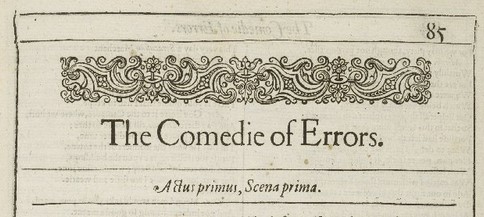
In The Comedy of Errors, "beg" occurs only four times; "poor," 10. The story contains two sets of twins, and each set bears the same name: Two of Antipholus, two of Dromio, the former raised to be masters, the latter bought and raised to be servants (slaves). - Because "their parents were exceeding *poor*," the Dromio twins were "bought and brought up to attend" Egeon's sons (1.1, an act of charity, or exploitation, or both). - But Egeon of Syracuse has traveled to Ephesus as a refugee to find his later-separated sons, risking death by execution because Syracuse and Ephesus are at war. - Solinus, Duke of Ephesus, tells Egeon to *beg* or borrow the money for his ransom to spare his life (1.1). - Luciana, sister-in-law to Antipholus of Ephesus, tells her sister that the love she *begged* for her sister from the Antipholus she believed was her sister's husband, he begged of her (4.2, because unknown to her, the Antipholus who begged lov...

Thanks to readers for the week of 28 September - 5 October, 2021

Image
Thank you to readers of this blog for this past week, which the blog's analytics say came to 283 views from the following 19+ countries: Thank you for your interest. I am grateful and humbled. ~~~~~~~~~~~~~~~~~~~~~~~~~~~~~~~~~~~~~~ My current project is a book tentatively titled Hamlet’s Bible , about biblical allusions and plot echoes in Hamlet. Below is a link to a list of some of my top posts (“greatest hits”), including a description of my book project (last item on the list): https://pauladrianfried.blogspot.com/2019/12/top-20-hamlet-bible-posts.html I post every week, so please visit as often as you like and consider subscribing.

Begging and Poor in Richard III (1592–1593)

Image
The word "beg" occurs 13 times, and "poor," 25 times in Richard III . On the lips of Richard, Duke of Gloucester, when it is not disparaging, it is often dishonest and manipulative. The Princes in the Tower (among others) are very concerned with avoiding the appearance of begging as a mark of weakness. A failed assassin claims conscience leaves him a beggar (a theme that comes up again in Hamlet). In comparison, when Prince Hamlet and others refer to him as “poor” and “beggar” (more often than any other character in that play) the contrast between Hamlet and these other royals is stark and significant. [From title page, Richard III (cropped), from the second folio of 1632. Image via Folger Shakespeare Library . Creative Commons.] Nizar Zouidi of the University of Hail has noted the performative aspect of Richard III : He performs the roles of script writer, actor, and director in his own show ( See Nizar's abstract for his essay/chapter here .) R...

Thanks to readers for the week of 21--28 September, 2021

Image
Thank you to readers of this blog for this past week, which the blog's analytics say came to 253 views from the following 19+ countries: A special thanks to readers from Sweden, the country from where my largest number of views came for this week. Thank you for your interest. I am grateful and humbled. ~~~~~~~~~~~~~~~~~~~~~~~~~~~~~~~~~~~~~~ My current project is a book tentatively titled Hamlet’s Bible , about biblical allusions and plot echoes in Hamlet. Below is a link to a list of some of my top posts (“greatest hits”), including a description of my book project (last item on the list): https://pauladrianfried.blogspot.com/2019/12/top-20-hamlet-bible-posts.html I post every week, so please visit as often as you like and consider subscribing.

"All Crowns Are Hollow": Impending death's effects on Shakespearean monarchs

Image
In 2019, Shakespeare Magazine from the UK published a short piece called, " All Crowns are Hollow: The scheming and backstabbing politicians of today would do well to ponder the fate of Shakespeare’s Kings ." [Image from The Hollow Crown , British TV series, via Wikipedia . Fair use.] The piece includes the observation, "Very few of the kings in Shakespeare ever get to do any actual ‘kinging’. Instead they fight tooth and nail to get to the throne – often committing heinous crimes like murder in the process – and then they die." While the title of this piece points to some usefulness for "scheming and backstabbing politicians of today," we might also consider how Shakespeare's plays reflect the playwright's (and his time's?) attitudes and skepticism about monarchs. Many of Shakespeare's monarchs are shown in a bad light: - Macbeth... - Richard II is a poor king, deposed. - Henry IV: The Biblical King David did not want to kill...

Thanks to readers for the week of 14-21 September, 2021

Image
Thank you to readers of this blog for this past week, which the blog's analytics say came to 218 views from the following 19+ countries: Thank you for your interest. I am grateful and humbled. ~~~~~~~~~~~~~~~~~~~~~~~~~~~~~~~~~~~~~~ My current project is a book tentatively titled Hamlet’s Bible , about biblical allusions and plot echoes in Hamlet. Below is a link to a list of some of my top posts (“greatest hits”), including a description of my book project (last item on the list): https://pauladrianfried.blogspot.com/2019/12/top-20-hamlet-bible-posts.html I post every week, so please visit as often as you like and consider subscribing.
Begging & Poor, Dust & Stones in Titus Andronicus (1593)

Image
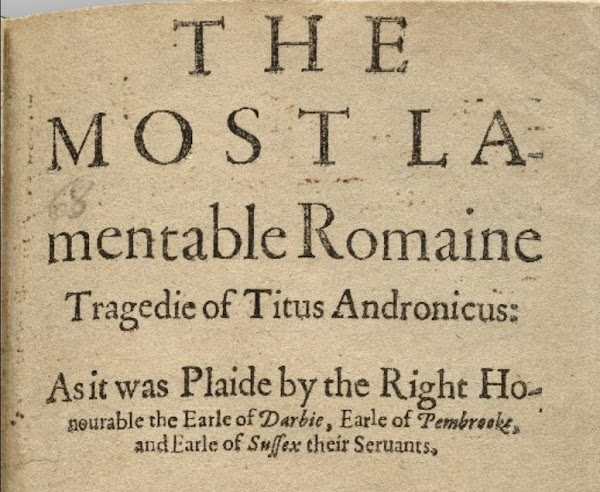
"Poor" occurs 16 times in Titus Andronicus (1593): - Titus speaks of "the poor remains": only four of his 25 "valiant sons" survived battle with the Goths (1.1). - He speaks of himself and his daughter Lavina as "poor creatures," and of his "poor right hand" (3.2) after he was deceived to have the left cut off to ransom two sons. [Cover page from the 1594 Quarto of [Titus Andronicus] The most lamentable Romaine tragedie of Titus Andronicus As it was plaide by the right honourable the Earle of Darbie, Earle of Pembrooke, and Earle of Sussex their seruants. Image via Wikipedia and the Folger Shakespeare Library . Public Domain.] "Beg" occurs 10 times, including Lavina in 2.3 begging Tamora to kill her: Her beloved Bassianus had been slain; she'd rather be killed than raped by Tamora's sons. They rape her, cut out her tongue, and cut off her hands in hope that she can't identify her attackers. But later she d...

Thanks to readers of the week of 7-14 September, 2021

Image
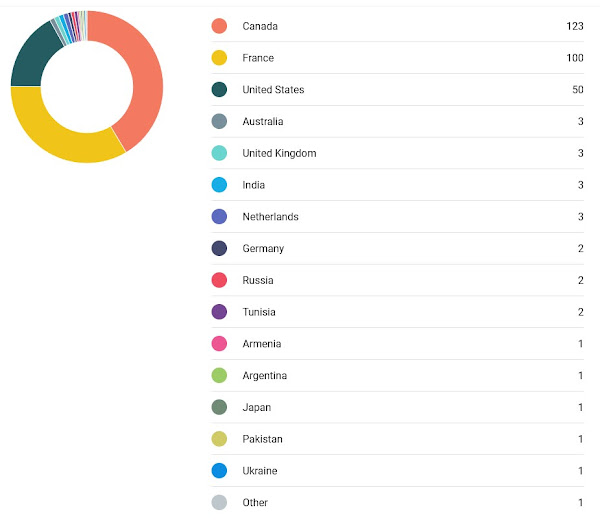
Thank you to readers of this blog for this past week, which the blog's analytics say came to 297 views from the following 15+ countries: Usually my views seem to hover between 80 and 110 total, with my highest single group of views from the USA, with a few exceptions. This week was definitely an exception, with 100 views from France and 123 from Canada. This may have been from two single researchers, one from each counttry browsing many of the posts, or it may have been from a class or two, or some mixture. However it happened, thank you for your interest. I am grateful and humbled. ~~~~~~~~~~~~~~~~~~~~~~~~~~~~~~~~~~~~~~ My current project is a book tentatively titled Hamlet’s Bible , about biblical allusions and plot echoes in Hamlet. Below is a link to a list of some of my top posts (“greatest hits”), including a description of my book project (last item on the list): https://pauladrianfried.blogspot.com/2019/12/top-20-hamlet-bible-posts.html I post every week, so ...

Begging and Poor in 3 Henry VI (1591)

Image
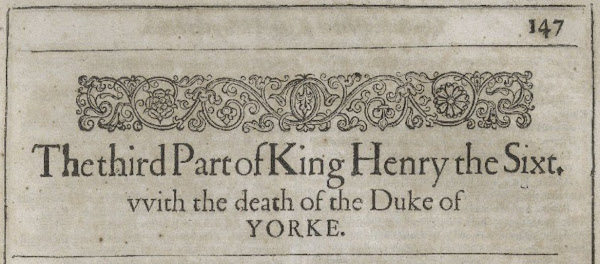
Shakespeare's Henry VI, Part 3 has five instances of "beg" and 18 of "poor." Characters often act more like the self-concerned rich man in the gospel tale than like beggar Lazarus, with the exception of Henry, who, while a weak king, is more humble than most of his nobles. [Image cropped from The third Part of Henry the Sixt, with the death of the Duke of Yorke , in the Second Folio edition of 1632, via Folger Shakespeare Library Digital Image Collection . Creative Commons.] "Poor" in this play is often used to mean "pitiable," and often sarcastically by characters who lack pity ( *emphasis* mine): 1.1 York and Lancaster factions argue about their claims to the throne. Lord Clifford is impoverished by the death of his father but also by his thirst for revenge. Warwick calls him "poor Clifford" as one might taunt an enemy: Earl of Warwick: " *Poor* Clifford! how I scorn his worthless threats!" Under duress, He...