Posts

Begging and Poor in Richard III (1592–1593)

Image
The word "beg" occurs 13 times, and "poor," 25 times in Richard III . On the lips of Richard, Duke of Gloucester, when it is not disparaging, it is often dishonest and manipulative. The Princes in the Tower (among others) are very concerned with avoiding the appearance of begging as a mark of weakness. A failed assassin claims conscience leaves him a beggar (a theme that comes up again in Hamlet). In comparison, when Prince Hamlet and others refer to him as “poor” and “beggar” (more often than any other character in that play) the contrast between Hamlet and these other royals is stark and significant. [From title page, Richard III (cropped), from the second folio of 1632. Image via Folger Shakespeare Library . Creative Commons.] Nizar Zouidi of the University of Hail has noted the performative aspect of Richard III : He performs the roles of script writer, actor, and director in his own show ( See Nizar's abstract for his essay/chapter here .) R...

Thanks to readers for the week of 21--28 September, 2021

Image
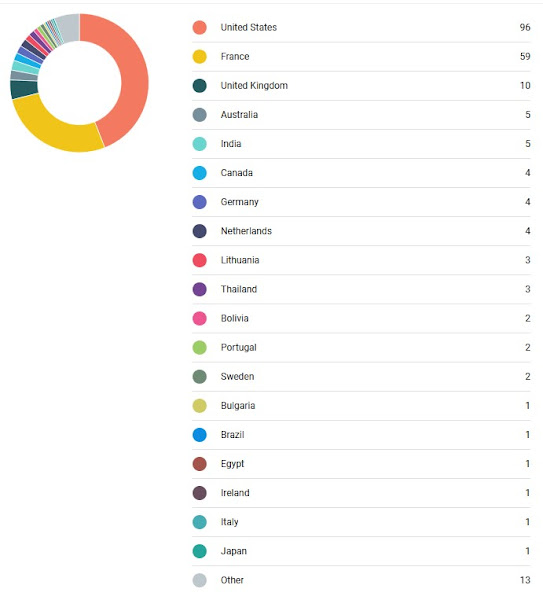
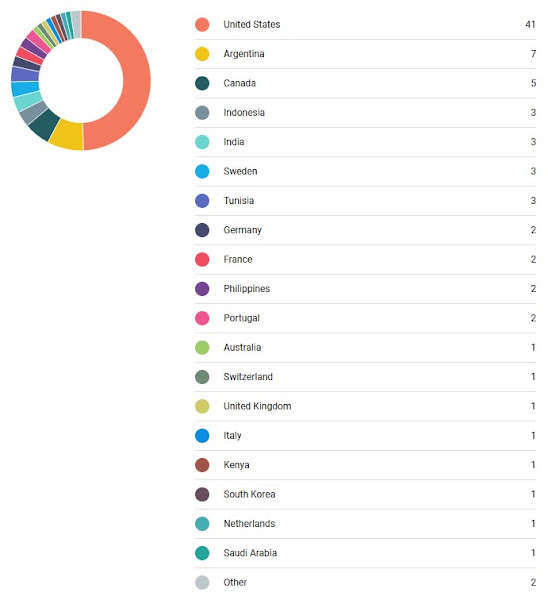
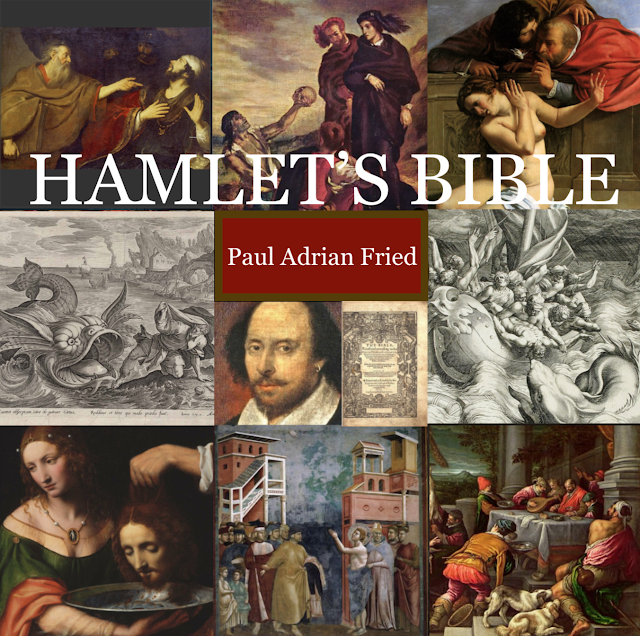
Thank you to readers of this blog for this past week, which the blog's analytics say came to 253 views from the following 19+ countries: A special thanks to readers from Sweden, the country from where my largest number of views came for this week. Thank you for your interest. I am grateful and humbled. ~~~~~~~~~~~~~~~~~~~~~~~~~~~~~~~~~~~~~~ My current project is a book tentatively titled Hamlet’s Bible , about biblical allusions and plot echoes in Hamlet. Below is a link to a list of some of my top posts (“greatest hits”), including a description of my book project (last item on the list): https://pauladrianfried.blogspot.com/2019/12/top-20-hamlet-bible-posts.html I post every week, so please visit as often as you like and consider subscribing.

"All Crowns Are Hollow": Impending death's effects on Shakespearean monarchs

Image
In 2019, Shakespeare Magazine from the UK published a short piece called, " All Crowns are Hollow: The scheming and backstabbing politicians of today would do well to ponder the fate of Shakespeare’s Kings ." [Image from The Hollow Crown , British TV series, via Wikipedia . Fair use.] The piece includes the observation, "Very few of the kings in Shakespeare ever get to do any actual ‘kinging’. Instead they fight tooth and nail to get to the throne – often committing heinous crimes like murder in the process – and then they die." While the title of this piece points to some usefulness for "scheming and backstabbing politicians of today," we might also consider how Shakespeare's plays reflect the playwright's (and his time's?) attitudes and skepticism about monarchs. Many of Shakespeare's monarchs are shown in a bad light: - Macbeth... - Richard II is a poor king, deposed. - Henry IV: The Biblical King David did not want to kill...

Thanks to readers for the week of 14-21 September, 2021

Image
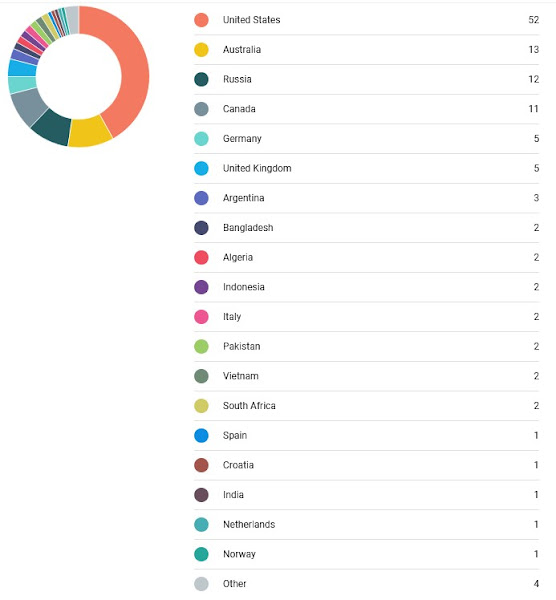
Thank you to readers of this blog for this past week, which the blog's analytics say came to 218 views from the following 19+ countries: Thank you for your interest. I am grateful and humbled. ~~~~~~~~~~~~~~~~~~~~~~~~~~~~~~~~~~~~~~ My current project is a book tentatively titled Hamlet’s Bible , about biblical allusions and plot echoes in Hamlet. Below is a link to a list of some of my top posts (“greatest hits”), including a description of my book project (last item on the list): https://pauladrianfried.blogspot.com/2019/12/top-20-hamlet-bible-posts.html I post every week, so please visit as often as you like and consider subscribing.

Begging & Poor, Dust & Stones in Titus Andronicus (1593)

Image
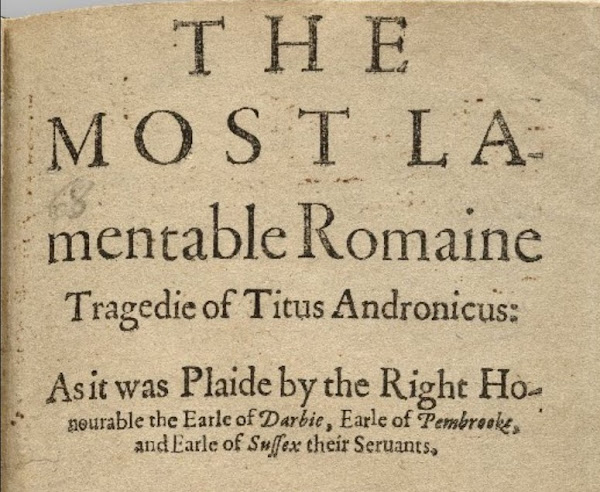
"Poor" occurs 16 times in Titus Andronicus (1593): - Titus speaks of "the poor remains": only four of his 25 "valiant sons" survived battle with the Goths (1.1). - He speaks of himself and his daughter Lavina as "poor creatures," and of his "poor right hand" (3.2) after he was deceived to have the left cut off to ransom two sons. [Cover page from the 1594 Quarto of [Titus Andronicus] The most lamentable Romaine tragedie of Titus Andronicus As it was plaide by the right honourable the Earle of Darbie, Earle of Pembrooke, and Earle of Sussex their seruants. Image via Wikipedia and the Folger Shakespeare Library . Public Domain.] "Beg" occurs 10 times, including Lavina in 2.3 begging Tamora to kill her: Her beloved Bassianus had been slain; she'd rather be killed than raped by Tamora's sons. They rape her, cut out her tongue, and cut off her hands in hope that she can't identify her attackers. But later she d...

Thanks to readers of the week of 7-14 September, 2021

Image
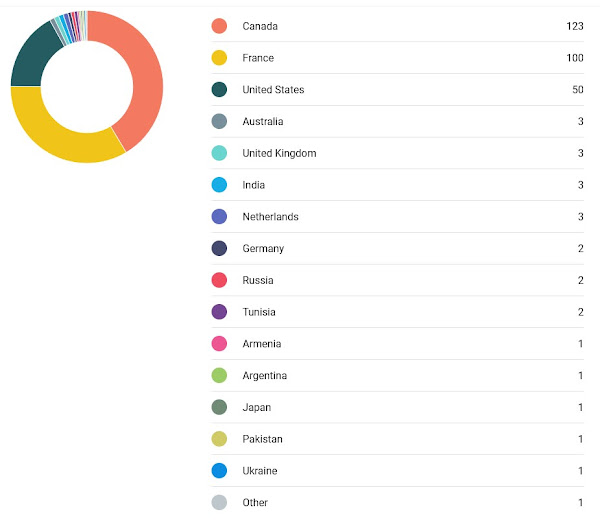
Thank you to readers of this blog for this past week, which the blog's analytics say came to 297 views from the following 15+ countries: Usually my views seem to hover between 80 and 110 total, with my highest single group of views from the USA, with a few exceptions. This week was definitely an exception, with 100 views from France and 123 from Canada. This may have been from two single researchers, one from each counttry browsing many of the posts, or it may have been from a class or two, or some mixture. However it happened, thank you for your interest. I am grateful and humbled. ~~~~~~~~~~~~~~~~~~~~~~~~~~~~~~~~~~~~~~ My current project is a book tentatively titled Hamlet’s Bible , about biblical allusions and plot echoes in Hamlet. Below is a link to a list of some of my top posts (“greatest hits”), including a description of my book project (last item on the list): https://pauladrianfried.blogspot.com/2019/12/top-20-hamlet-bible-posts.html I post every week, so ...

Begging and Poor in 3 Henry VI (1591)

Image
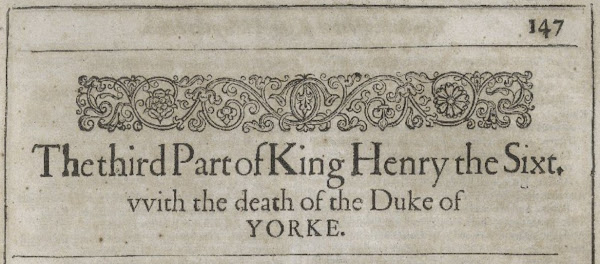
Shakespeare's Henry VI, Part 3 has five instances of "beg" and 18 of "poor." Characters often act more like the self-concerned rich man in the gospel tale than like beggar Lazarus, with the exception of Henry, who, while a weak king, is more humble than most of his nobles. [Image cropped from The third Part of Henry the Sixt, with the death of the Duke of Yorke , in the Second Folio edition of 1632, via Folger Shakespeare Library Digital Image Collection . Creative Commons.] "Poor" in this play is often used to mean "pitiable," and often sarcastically by characters who lack pity ( *emphasis* mine): 1.1 York and Lancaster factions argue about their claims to the throne. Lord Clifford is impoverished by the death of his father but also by his thirst for revenge. Warwick calls him "poor Clifford" as one might taunt an enemy: Earl of Warwick: " *Poor* Clifford! how I scorn his worthless threats!" Under duress, He...

Thanks to readers of the week of 31 August - 7 September, 2021

Image
Thank you to readers of this blog for this past week, which the blog's analytics say came to 83 views from the following 19+ countries: Thank you for your interest. I am grateful and humbled. ~~~~~~~~~~~~~~~~~~~~~~~~~~~~~~~~~~~~~~ My current project is a book tentatively titled Hamlet’s Bible , about biblical allusions and plot echoes in Hamlet. Below is a link to a list of some of my top posts (“greatest hits”), including a description of my book project (last item on the list): https://pauladrianfried.blogspot.com/2019/12/top-20-hamlet-bible-posts.html I post every week, so please visit as often as you like and consider subscribing.

Begging & Poor, Eve, & the Protestant-Catholic Context for 2 Henry VI

Image
A funny thing happened on the way to searching 2 Henry VI for instances of "beg" (five) and "poor" (14): [Image: From the First Folio of 1623, via Folger Shakespeare Library . Creative Commons.]  First, it is hard not to be struck by the idea that Shakespeare was writing at a time of Protestant-Catholic strife, in a divided country: He chose to write about the War of the Roses, a time when England was divided by the houses of Lancaster and York. Teachers who omit mention of this do their students a disservice. Second, in 2 Henry VI , audiences are again (as in Hamlet ) shown a variation of the theme of woman as an Eve figure, a source of corruption. In Hamlet, the prince complains about Gertrude's frailty and asks if she had a hand in killing his father; but in 2 Henry VI , Queen Margaret is having an affair with the Earl of Suffolk; if she is Eve, he is a serpent. Third, while searching for "instances of "beg" and "poor,...

Thanks to readers of the week of 24-31 August, 2021

Image
Thank you to readers of this blog for this past week, which the blog's analytics say came to 124 views from the following 19+ countries: Thank you for your interest. I am grateful and humbled. ~~~~~~~~~~~~~~~~~~~~~~~~~~~~~~~~~~~~~~ My current project is a book tentatively titled Hamlet’s Bible , about biblical allusions and plot echoes in Hamlet. Below is a link to a list of some of my top posts (“greatest hits”), including a description of my book project (last item on the list): https://pauladrianfried.blogspot.com/2019/12/top-20-hamlet-bible-posts.html I post every week, so please visit as often as you like and consider subscribing.

FIVE BOOKS on Shakespeare

Image
FIVE BOOKS often has authors and authorities recommend five favorite books. This one is about Shakespeare, and includes recommendations from "Sir Stanley Wells, honorary president of the Shakespeare Birthplace Trust in Stratford, and General Editor of The Complete Oxford Shakespeare; Emma Smith, Professor of Shakespeare Studies at Oxford University, and acclaimed expert of Shakespeare's First Folio; and James Shapiro, Professor of English at Columbia University, and award-winning author of Contested Will: Who Wrote Shakespeare? and 1606: William Shakespeare and the Year of Lear" - and more (seven experts in all). These include recommendations for plays, for children's book adaptations, books on the sonnets, on the life of Shakespeare, and scholarly books on Shakespeare. https://fivebooks.com/books/shakespeare-plays/ ~~~~~~~~~~~~~~~~~~~~~~~~ ~~~~~~~~~~~~~~~~~~~~~~~~ Thanks for reading! My current project is a book tentatively titled Hamlet’s Bible , about ...

Pieta in Lear, and Sons Sacrificed for Fathers in 1 Henry VI & Hamlet

Image
Last week I posted about instances of "beg" and "poor" in 1 Henry VI, in light of references in Hamlet to the prince as begging or poor, and of the Lazarus allusion in that play. I mentioned how, in 4.5, John Talbot begs his father to flee, while he himself will stay behind and fight to his death. This is a touching moment, as is the moment when the father later finds the dead body of the son. And as my blog often focuses upon biblical allusions, I should mention that this scene echoes two essential plot ideas from the Christian story of the gospels: First, it echoes the idea that Jesus is the son who was sent and sacrificed for the salvation of humanity. The son has to die, and is obedient to the father to the end. (In fact, some Biblical scholars and theologians have noted that Pauline theology assumes that the human Jesus only becomes divine through his love/service and obedience to the father, to his death, rather than being divine from birth; Paul's let...

Thanks to readers for the week of 17-24 August, 2021

Image
Thank you to readers of this blog for this past week, which the blog's analytics say came to 115 views from the following countries: Thank you for your interest. I am grateful and humbled. ~~~~~~~~~~~~~~~~~~~~~~~~~~~~~~~~~~~~~~ My current project is a book tentatively titled Hamlet’s Bible , about biblical allusions and plot echoes in Hamlet. Below is a link to a list of some of my top posts (“greatest hits”), including a description of my book project (last item on the list): https://pauladrianfried.blogspot.com/2019/12/top-20-hamlet-bible-posts.html I post every week, so please visit as often as you like and consider subscribing.

Begging and Poor in 1 Henry VI, 1591-92

Image
I am still exploring instances of "beg" and "poor" in other Shakespeare plays, in light of references in Hamlet to the prince as begging or poor, and of the beggar Lazarus allusion in that play (1.5). 1 Henry VI is my focus today. Henry VI, Parts 1-3 takes up where Henry V leaves off, and is in part about the end of the Hundred Years War and the start of the War of the Roses. [Image from First Folio, File:STC 22273 Fo.1 no.68 k2v.jpg, via Folgerpedia at Folger.edu . Cropped. Fair use.] In 1 Henry VI , there are 11 instances of “poor” but only two instances of “beg.” In 4.5, John Talbot begs his father to flee, and for him to stay behind and fight to his death ( emphasis mine): Then let me stay; and, father, do you fly: Your loss is great, so your regard should be; My worth unknown, no loss is known in me. Upon my death the French can little boast; In yours they will, in you all hopes are lost. Flight cannot stain the honour you have won; But mine ...