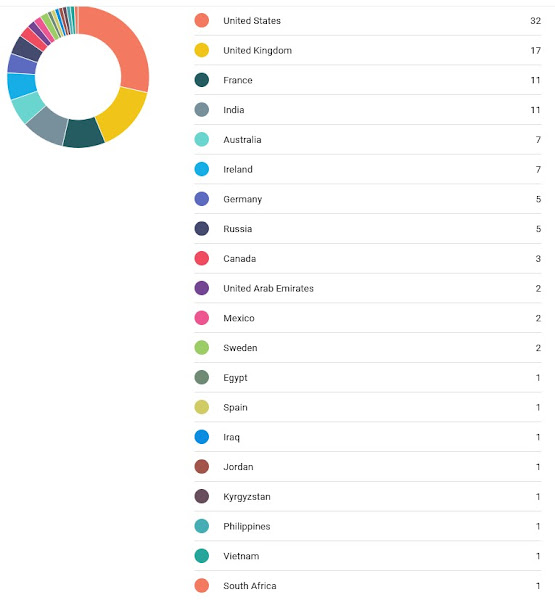
Posts

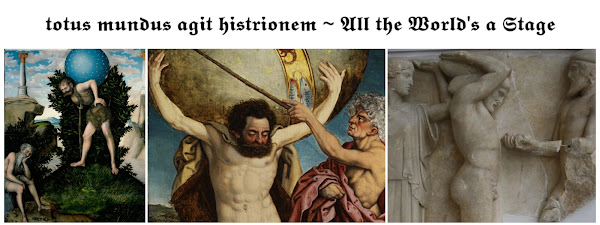
"Hercules and his load," not Atlas at Shakespeare's Globe?
Image
Rosencrantz in Shakespeare's Hamlet speaks of "Hercules and his load" (2.2.384-5) [1], which some take to be a reference to the sign or flag displayed at the Globe Theater in Shakespeare’s lifetime. [2] Was it Hercules on the sign, not Atlas? Or does Hamlet refer to Hercules for its thematic connections, while the sign actually displayed Atlas? In an Elizabethan context, the references are fraught with political implications: Atlas was a Titan who had led a rebellion against the new order of Gods on Olympus, but failed: His punishment was to hold up the world. In one story, Hercules temporarily held the world while Atlas did him a favor: [3] Hercules was a son of Zeus by one of many affairs with mortal women. Zeus’ wife Hera was jealous and tried to destroy Hercules. In one such effort, Hera made Hercules crazy, and he killed his wife and children. Grief-stricken Hercules was given labors to overcome his grief. One involved holding the world for At...
Thanks to readers, 20-27 September, 2022

Image
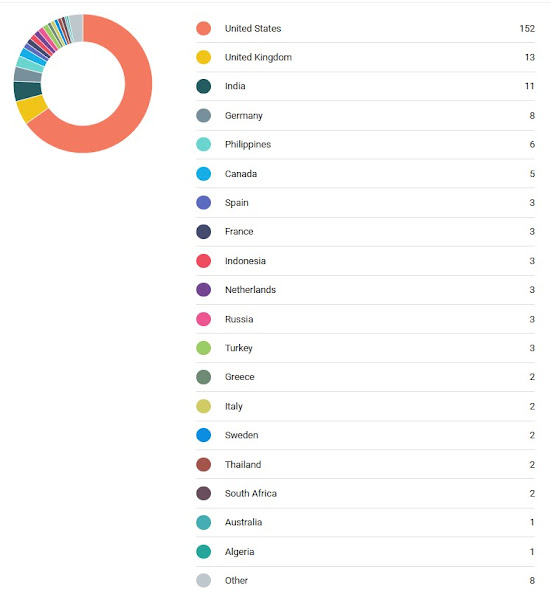
Thanks to readers, 20-27 September, 2022 ~~~~~~~ Thank you to readers of this blog for this past week, which the blog's analytics say came to 233 views from the following countries: Thank you for your interest. I am grateful and humbled. ~~~~~~~~~~~~~~~~~~~~~~~~~~~~~~~~~~~~~~ My current project is a book tentatively titled Hamlet’s Bible , about biblical allusions and plot echoes in Hamlet . Below is a link to a list of some of my top posts (“greatest hits”), including a description of my book project (last item on the list): https://pauladrianfried.blogspot.com/2019/12/top-20-hamlet-bible-posts.html I post every week, so please visit as often as you like and consider subscribing. To find the subscribe button, see the drop-down menu with three horizontal lines = in the upper left.

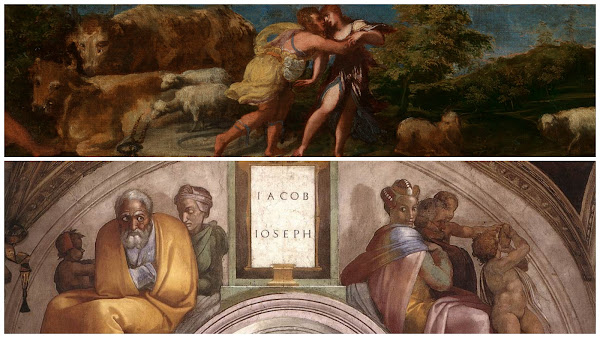
Series conclusion: Hamlet & Jacob - part 4

Image
In this series of posts on Jacob and Hamlet, I’ve suggested that in Shakespeare’s play, certain elements in the text and its themes are either allusions to the biblical Jacob-Esau tales, or show an influence of those tales on Shakespeare’s development of the play. [1] These include - Laertes’ use of the phrase, “double blessing” ( see part 1 ); - the possibility that Laertes is an Esau figure, while Hamlet and Ophelia might be viewed as Jacob figures ( see part 1 ); - the idea of poetic justice in Hamlet as in part influenced by its presence in the Jacob tales ( see part 2 ); - the importance of maternal approval for marriage, not only for Jacob, but also for Ophelia and Hamlet, with Gertrude’s voice of approval ( see part 3 ). The impulse of some might be to take Laertes’ phrase, “double blessing” (1.3.57-59) and consult Naseeb Shaheen’s “Biblical References in Shakespeare’s Plays” (1999) as authoritative, or even as the last word. But Shaheen is of very limited help, even m...

Thanks to readers, 13-20 September, 2022

Image
Thanks to readers, 13-20 September, 2022 ~~~~~~~ Thank you to readers of this blog for this past week, which the blog's analytics say came to 123 views from the following countries: Thank you for your interest. I am grateful and humbled. ~~~~~~~~~~~~~~~~~~~~~~~~~~~~~~~~~~~~~~ My current project is a book tentatively titled Hamlet’s Bible , about biblical allusions and plot echoes in Hamlet . Below is a link to a list of some of my top posts (“greatest hits”), including a description of my book project (last item on the list): https://pauladrianfried.blogspot.com/2019/12/top-20-hamlet-bible-posts.html I post every week, so please visit as often as you like and consider subscribing. To find the subscribe button, see the drop-down menu with three horizontal lines = in the upper left.

Marriage & Maternal Approval: Jacob - Hamlet Echoes - part 3

Image
Themes of marriage and maternal approval have some interesting connections when comparing the biblical Jacob tales with Shakespeare’s Hamlet: [1] Jacob’s mother plays a key role in favoring him for the birthright (Genesis 25:19-27), but also helping him deceive his father (Genesis 27:1-40). It is extremely important that Jacob receives encouragement and permission from his mother - who had coddled him, favored him - to go and seek a bride (Genesis 27:41-45) when his brother Esau is angry after learning that Jacob has deceived his father and received the birthright/blessing that Esau had expected. This permission and encouragement from Rebekah helps open a gap between mother and son that Freud and others would say is healthy. Queen Gertrude acts in similar motherly ways toward Ophelia as well as toward her son Hamlet. Ophelia’s mother is absent (like Hamlet's father; she is a feminine mirror image of Hamlet); like the ghost and Claudius, Polonius is a dysfunctional fathe...

Thanks to readers, 6-13 September, 2022

Image
Thanks to readers, 6-13 September, 2022 This blog recently surpassed 30,000 views! Thanks for your support! Thank you to readers of this blog for this past week, which the blog's analytics say came to 112 views from the following countries: Thank you for your interest. I am grateful and humbled. ~~~~~~~~~~~~~~~~~~~~~~~~~~~~~~~~~~~~~~ My current project is a book tentatively titled Hamlet’s Bible , about biblical allusions and plot echoes in Hamlet . Below is a link to a list of some of my top posts (“greatest hits”), including a description of my book project (last item on the list): https://pauladrianfried.blogspot.com/2019/12/top-20-hamlet-bible-posts.html I post every week, so please visit as often as you like and consider subscribing. To find the subscribe button, see the drop-down menu with three horizontal lines = in the upper left.

“Hoist with his own petard”: Jacob-Hamlet Echoes, part 2

Image
In addition to Laertes’ “double blessing” remark (1.3.58), which points to the biblical Jacob story ( as noted in a previous post ) [1], note how in both Hamlet and the biblical Jacob tale, “purposes mistook” fall on the “inventor’s heads” (Horatio in (5.2.426-427)): What goes around comes around. A perennial theme. As Shakespeare develops this theme richly, echoing biblical themes, we are right to ask if Shakespeare was influenced by the Jacob story - besides a myriad of others, including biblical teachings. [2] DECEIVER BECOMES DECEIVED IN THE JACOB TALES (Gen 25-33): 1.a. By pretending to be his brother, Jacob deceives his father to obtain the birthright. - Later, his father-in-law Laban deceives Jacob on the wedding night, substituting the older sister Leah for the agreed-upon bride of Rachel. [3] 1.b. Jacob who struggles with sibling rivalry is later burdened with two wives, sisters who struggle with sibling-rivalry. IN HAMLET : 2.a. Hamlet tries to deceive the court, pretending...

Thanks to readers, 30 August-6 September, 2022

Image
Thanks to readers, 30 August-6 September, 2022 This blog recently surpassed 30,000 views! Thanks for your support! Thank you to readers of this blog for this past week, which the blog's analytics say came to 120 views from the following countries: Thank you for your interest. I am grateful and humbled. ~~~~~~~~~~~~~~~~~~~~~~~~~~~~~~~~~~~~~~ My current project is a book tentatively titled Hamlet’s Bible , about biblical allusions and plot echoes in Hamlet . Below is a link to a list of some of my top posts (“greatest hits”), including a description of my book project (last item on the list): https://pauladrianfried.blogspot.com/2019/12/top-20-hamlet-bible-posts.html I post every week, so please visit as often as you like and consider subscribing. To find the subscribe button, see the drop-down menu with three horizontal lines = in the upper left.

Hamlet and Cicero on Conscience

Image
“Conscience” in Hamlet is often in dialectic, or even process of formation; in Cicero, more idealized. Compare: HAMLET : O...that the Everlasting had not fix'd His canon 'gainst self-slaughter! (1.2.133-6) HAMLET : The play’s the thing Wherein I’ll catch the conscience of the King. (2.2.633-4) POLONIUS : We are oft to blame in this (’Tis too much proved), that with devotion’s visage And pious action we do sugar o’er The devil himself. CLAUDIUS (aside): ’tis too true! How smart a lash that speech doth give my conscience. (3.1.52-8) HAMLET : Thus conscience does make cowards of us all, And thus the native hue of resolution Is sicklied o’er with the pale cast of thought, And enterprises of great pitch and moment With this regard their currents turn awry And lose the name of action. (3.1.91-6) LAERTES : ...I’ll not be juggled with. To hell, allegiance! Vows, to the blackest devil! Conscience and grace, to the profoundest pit! I dare damnati...

Thanks to readers, 23-30 August, 2022

Image
Thanks to readers, 23-30 August, 2022 This blog recently surpassed 30,000 views! Thanks for your support! Thank you to readers of this blog for this past week, which the blog's analytics say came to 303 views from the following countries: Thank you for your interest. I am grateful and humbled. ~~~~~~~~~~~~~~~~~~~~~~~~~~~~~~~~~~~~~~ My current project is a book tentatively titled Hamlet’s Bible , about biblical allusions and plot echoes in Hamlet . Below is a link to a list of some of my top posts (“greatest hits”), including a description of my book project (last item on the list): https://pauladrianfried.blogspot.com/2019/12/top-20-hamlet-bible-posts.html I post every week, so please visit as often as you like and consider subscribing. To find the subscribe button, see the drop-down menu with three horizontal lines = in the upper left.

Hamlet and Homer - part 8 (Louden, Aguirre, Hornback)

Image
Names, common themes, and similar incidents in Homer* and Hamlet are too explicit and numerous to avoid (Laertes, Hyperion, Pyrrhus, Priam, Hecuba... See my previous posts in this series).[1] The text of Hamlet expects readers and audiences to view Hamlet through the lens of Homer, both for its similarities and for the ways it diverges from the old heroic texts. (*When I say Homer in this instance, it's shorthand for all the sources Shakespeare used, including Virgil, Ovid; Chaucer, and Chapman's partial translation of the Iliad, as well as other secondary sources.) Bruce Louden observes [2] that among the many new characters and plot elements in Hamlet that are not found in the Saxo Grammaticus and Belleforest sources, four of them are found in Homer: 1. the Ghost; 2. the coming of the actors to Elsinore; 3. the play-within-the-play; 4. the pirates who intercept the ship…. (33-34) Louden notes that Hamlet identifies with Pyrrhus, who wears black in mourning for the d...

Thanks to readers, 16-23 August, 2022

Image
Thanks to readers, 16-23 August, 2022 This blog recently surpassed 30,000 views! Thanks for your support! Thank you to readers of this blog for this past week, which the blog's analytics say came to 133 views from the following countries: Thank you for your interest. I am grateful and humbled. ~~~~~~~~~~~~~~~~~~~~~~~~~~~~~~~~~~~~~~ My current project is a book tentatively titled Hamlet’s Bible , about biblical allusions and plot echoes in Hamlet . Below is a link to a list of some of my top posts (“greatest hits”), including a description of my book project (last item on the list): https://pauladrianfried.blogspot.com/2019/12/top-20-hamlet-bible-posts.html I post every week, so please visit as often as you like and consider subscribing. To find the subscribe button, see the drop-down menu with three horizontal lines = in the upper left.

Sixteen Ways of Looking at Hamlet & Odysseus - part 7

Image
The list of similar incidents and themes in Hamlet and literature mentioning the Trojan War* is long. We might one day discern what similarities are coincidental [1], as compared to evidence that Shakespeare knew and was influenced by his first- or second-hand knowledge of Trojan War-related texts [1].   For now, here is a new list: 1. Odysseus swears an oath to Tyndareus to defend whoever wins Helen; Hamlet swears an oath to avenge Claudius having taken Gertrude from his father. 2. Paris takes Helen from Menelaus. Claudius takes Gertrude from King Hamlet. 3. Odysseus feigns madness , delays keeping his oath to Tyndareus; Hamlet feigns madness, delays keeping his oath to the ghost. 4. Hyperion/Helios is unsympathetic to Odysseus’ hungry men who steal his cattle. The ghost’s skin was made “ Lazar -like,” (ref. to a rich man who was unsympathetic to the beggar Lazarus in Luke 16). 5. Ithika's court & society are corrupted in Odysseus’ absence. Denmark is corrupted...

Thanks to readers, 9-16 August, 2022

Image
Thanks to readers, 9-16 August, 2022 This blog recently surpassed 30,000 views! Thank you to readers of this blog for this past week, which the blog's analytics say came to 229 views from the following countries: Thank you for your interest. I am grateful and humbled. ~~~~~~~~~~~~~~~~~~~~~~~~~~~~~~~~~~~~~~ My current project is a book tentatively titled Hamlet’s Bible , about biblical allusions and plot echoes in Hamlet . Below is a link to a list of some of my top posts (“greatest hits”), including a description of my book project (last item on the list): https://pauladrianfried.blogspot.com/2019/12/top-20-hamlet-bible-posts.html I post every week, so please visit as often as you like and consider subscribing. To find the subscribe button, see the drop-down menu with three horizontal lines = in the upper left.

Hyperion & Lazarus: Kings, Rich Men, & Pitiless Gods - Hamlet & The Odyssey part 6

Image
In Hamlet , the prince says that, compared to his Uncle Claudius, his dead father was “So excellent a king, that was to this Hyperion to a satyr” (1.2.143-4). [1] He compares his father to Hyperion and three other pagan gods (Jove, Mars, Mercury) with his mother in the closet scene. (3.4.66-8) What are the implications of comparing his father, the dead king, to Hyperion? Are some of the implications affirmed by another allusion, to the skin-sores of the beggar Lazarus? In The Odyssey, against his advice, Odysseus' men kill and eat the cattle of Hyperion/Helios. [2] The fact that they’re hungry sailors on a long journey home doesn’t matter so much to Hyperion as their disrespect. Are they not like bread-stealing Jean Valjean in Victor Hugo's Les Misérables, starving, to be pitied? [3] Hyperion seems ungenerous, greedy, unmerciful toward the hungry sailors. As punishment, they never make it home. Consider: Hyperion and the sailors resemble the Rich Man and L...